 en
 русский
 Deutsch
From Motor Core to Stator Housing: New Ruichi and Cailiang Showcase the Full Generator Foundation at WindEnergy Hamburg 2026
Content
- 1 Wuxi New Ruichi and Wuxi Cailiang at WindEnergy Hamburg 2026
- 2 Why Motor Housing and Core Quality Decide Generator Performance
- 3 Motor Housing and Stator Housing Solutions for Wind Turbine Generators
- 4 Stator Base and Motor Base Designs on Display
- 5 Motor Core, Rotor Core and Lamination Products from New Ruichi
- 6 Silicon Steel Supply Behind Every Lamination
- 7 Manufacturing Capability and Quality Assurance
- 8 Custom Samples and Rapid Prototyping
- 9 One Product Range, Several Motor Applications
- 10 What Buying Housing and Cores from One Group Means for Motor Makers
- 11 Next Steps and How to Contact Us
Wuxi New Ruichi and Wuxi Cailiang at WindEnergy Hamburg 2026
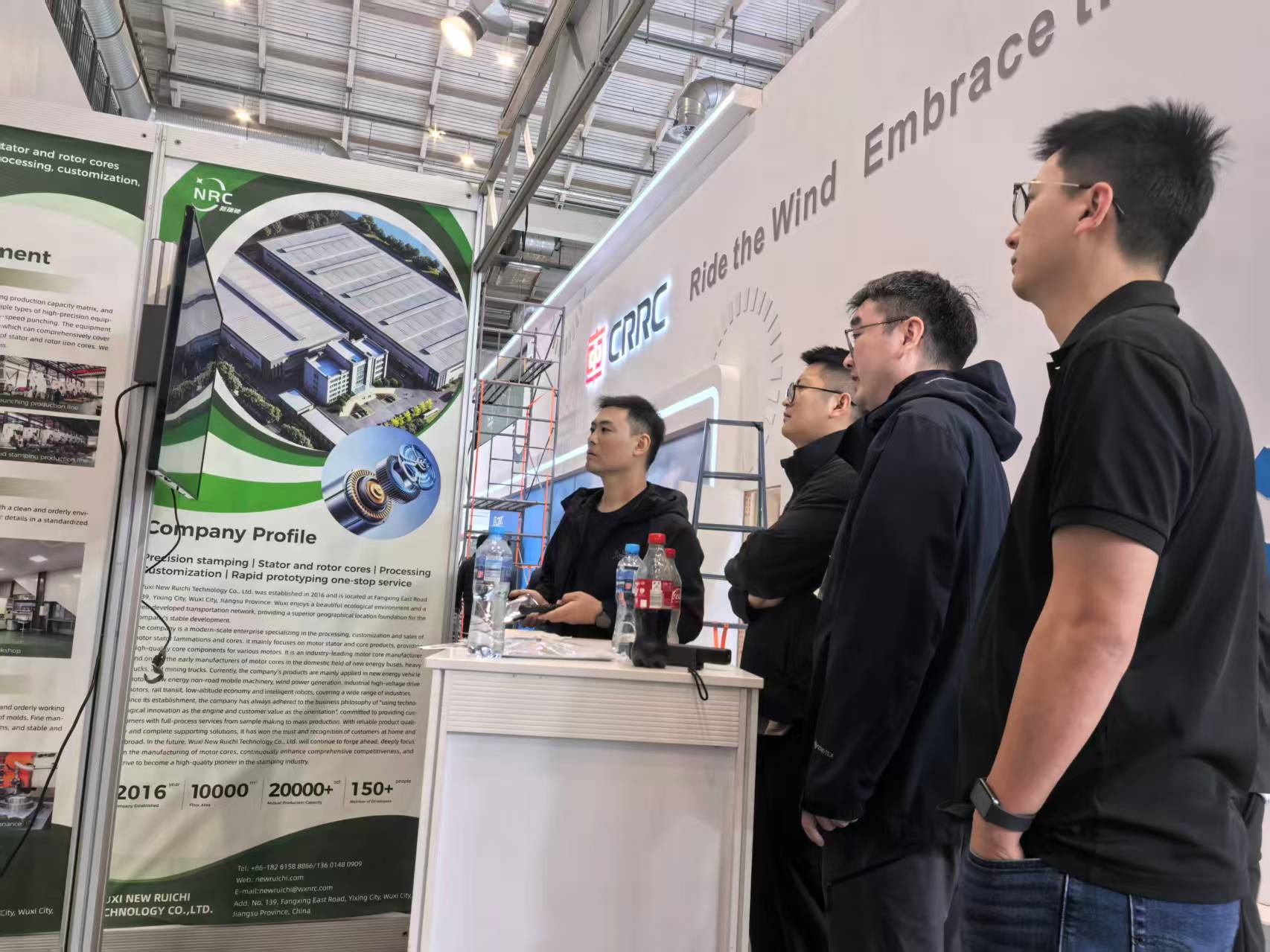
Wuxi, China – From September 22 to 25, 2026, Wuxi New Ruichi Technology Co., Ltd. and Wuxi Cailiang Machinery Co., Ltd. took their full range of motor housing, stator housing, motor core and rotor core products to WindEnergy Hamburg 2026, held at Hamburg Messe und Congress in Germany.
Held under the theme "Driving the energy transition. Together!", the show is the main meeting point for the onshore and offshore wind supply chain. According to the organizer, it was expected to bring together more than 1,600 exhibitors from about 40 countries, with around 43,000 participants from roughly 100 countries (official WindEnergy Hamburg 2026 visitor information).
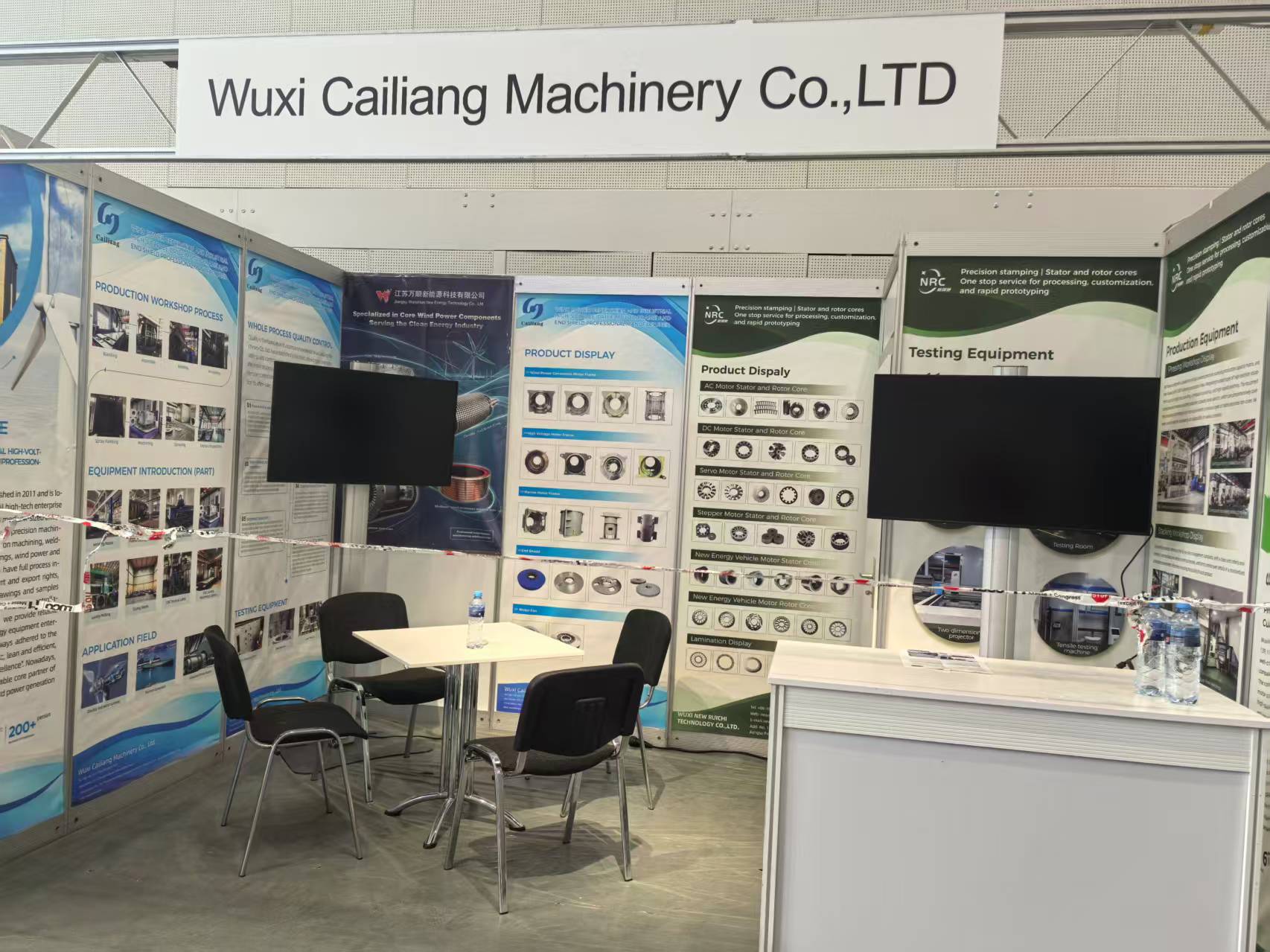
For the two companies, the show was a chance to present the products behind a wind generator that rarely get the spotlight: the frames that hold the stator, and the laminated cores that carry the magnetic flux. Every product group listed on the company website was part of the exhibit, from welded motor frames to silicon steel.
Why Motor Housing and Core Quality Decide Generator Performance
A generator is judged by its output, yet two passive components set the limits of that output long before the winding is installed. The stator housing defines the mechanical geometry. The lamination stack defines the magnetic behavior. If either one falls short, no amount of tuning elsewhere will recover the loss.
Consider the housing first. A wind generator sees vibration, torque reaction and thermal cycling for years without a break. A motor housing that flexes under these loads lets the stator drift away from the rotor, and the air gap becomes uneven. Uneven air gaps raise vibration and noise and shorten bearing life. Offshore, the housing also has to resist salt-laden air, which makes weld quality and surface protection part of the design brief rather than an afterthought.
The core is a different problem. Thin, insulated laminations limit eddy current losses, and accurate stacking keeps the slots aligned for the winding. Poor burr control or loose stacking shows up later as extra heat and lower efficiency. This is why buyers in the wind sector tend to ask about both parts in the same conversation, and why the two companies chose to exhibit them side by side.
Motor Housing and Stator Housing Solutions for Wind Turbine Generators
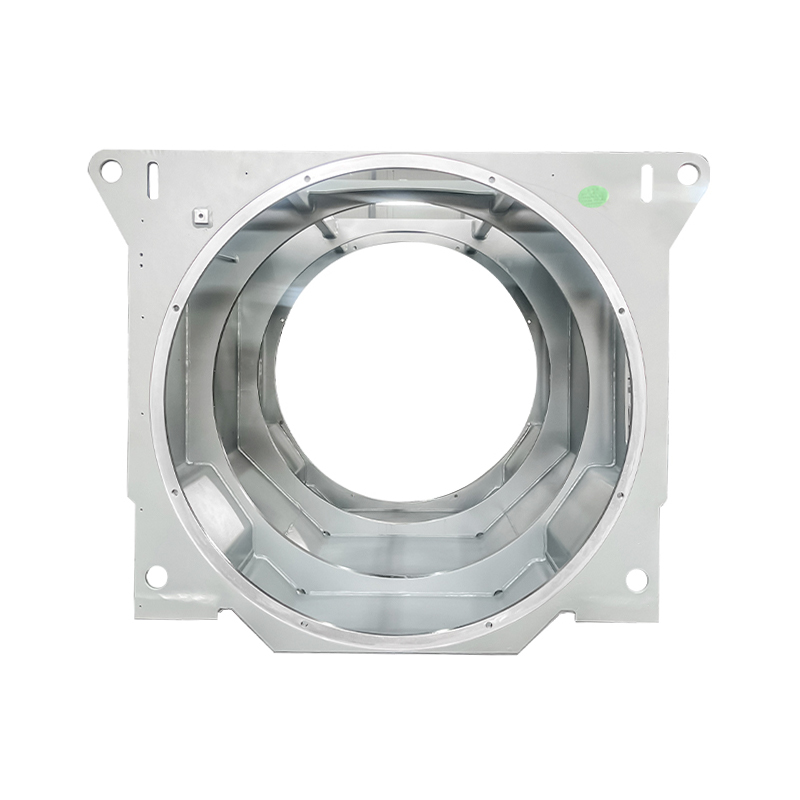
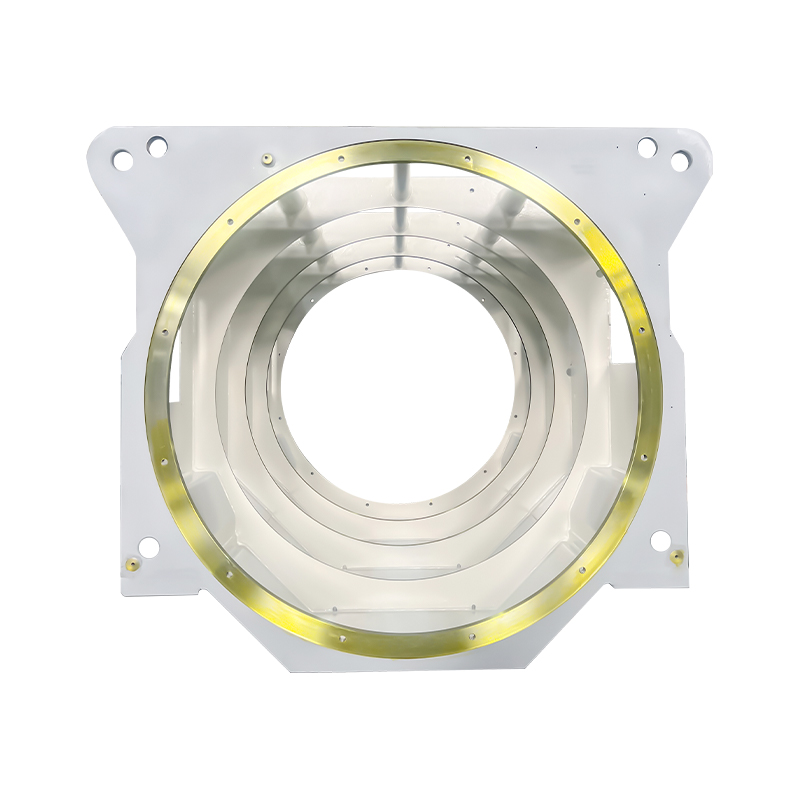
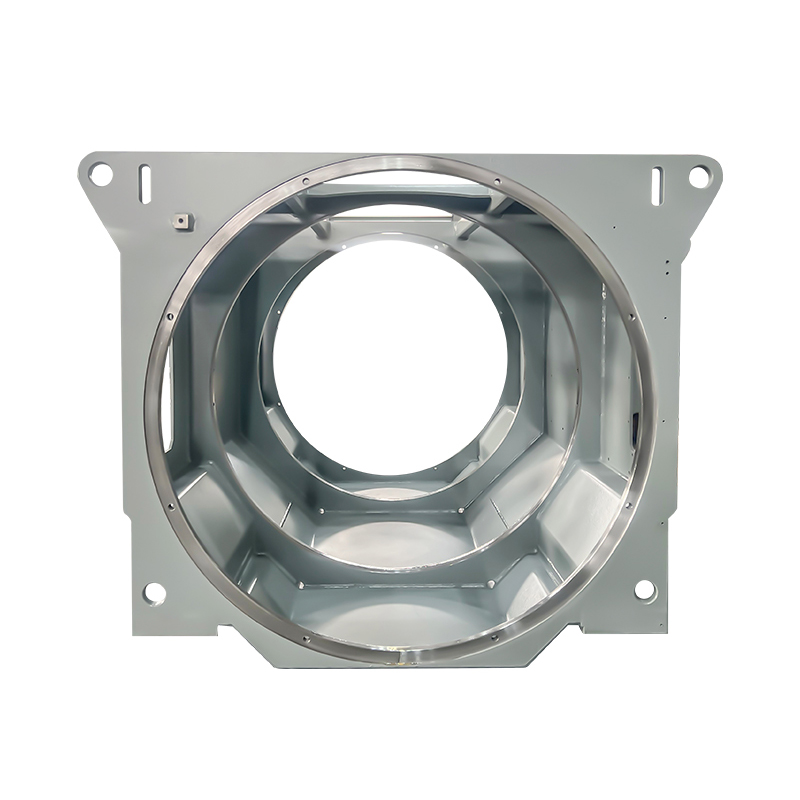
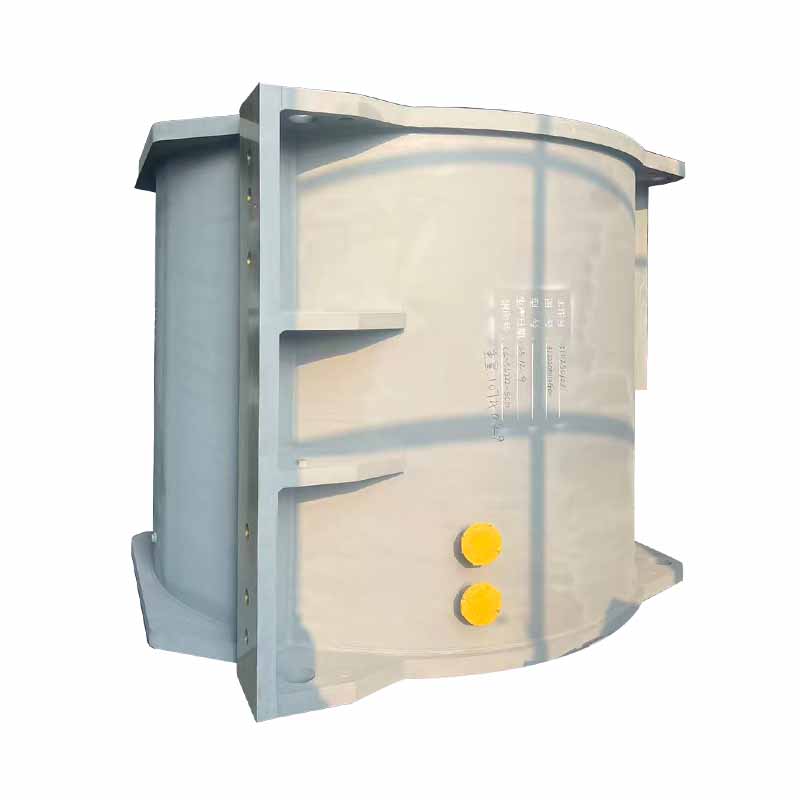
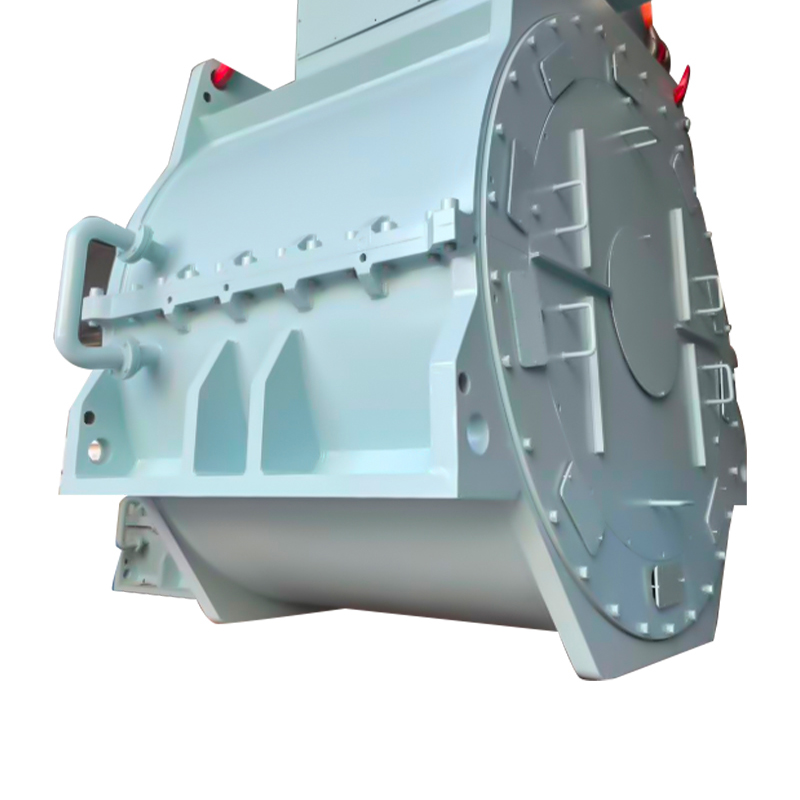
Wuxi Cailiang Machinery exhibited its welded box-type motor frames for wind turbines, built as rigid fabricated structures that support the stator and keep it concentric under load. A welded box-type design gives engineers room to place stiffening ribs, cooling provisions and mounting features exactly where the generator needs them, which a standard catalogue casting rarely allows.
Engineers who want the design logic behind these parts can read our engineering guide to wind turbine generator bases and frames and the companion article on motor housing materials, standards and selection.
As a welded motor housing supplier based in China, Cailiang also showed housing designs for high-voltage industrial motors and for marine duty, so visitors could compare structures across applications at one stand.
Stator Base and Motor Base Designs on Display
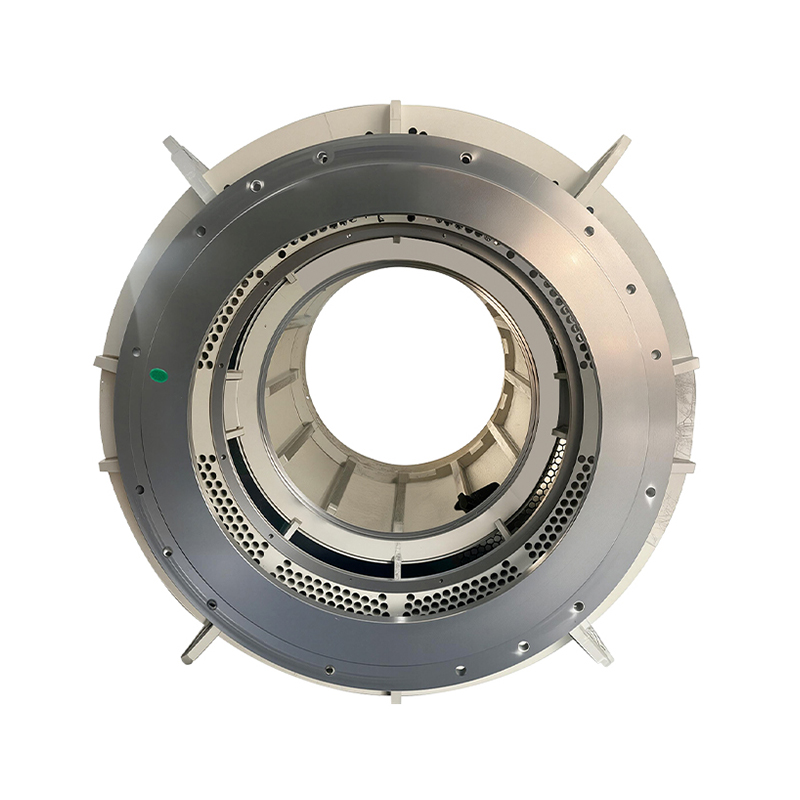
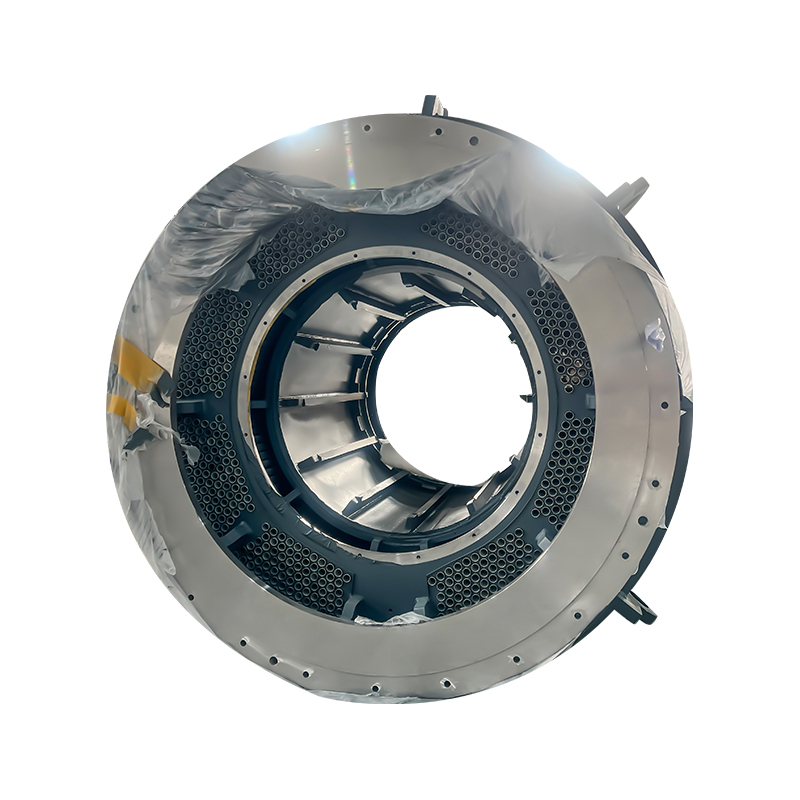
The exhibition line-up covered the complete Cailiang range of stator base and motor base structures:
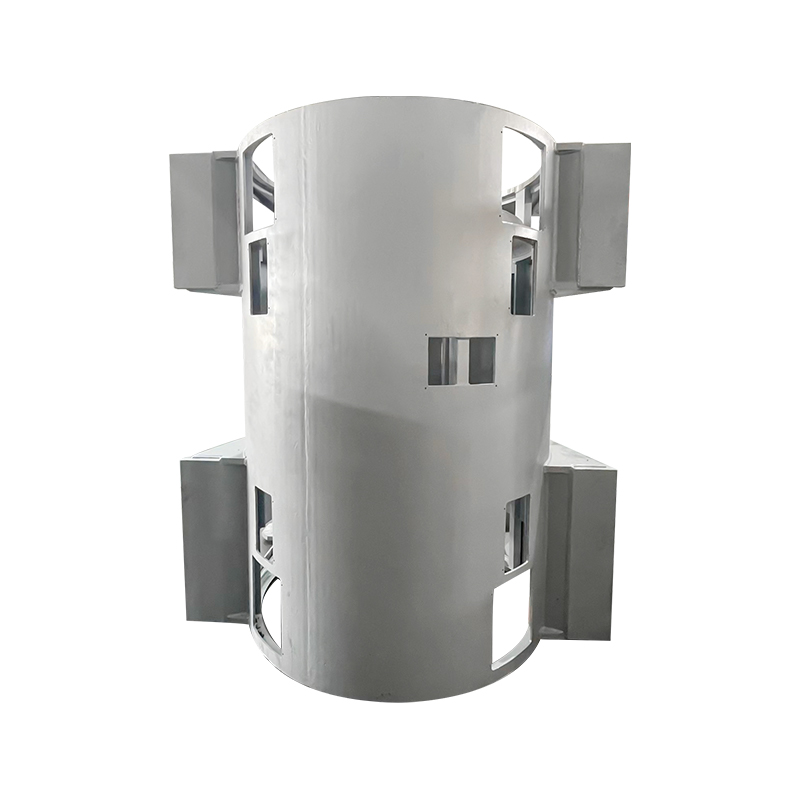
- Square-base cylindrical motor frame – a hybrid structure that combines a cylindrical body with a square mounting base.
- Industrial welded box-type motor base – a fabricated base for heavy industrial motors.
- High-voltage industrial motor frames – including the horizontal aluminum tube cooling frame, the vertical cylindrical base and the vertical pipe-penetrating base.
- Marine motor housings and generator bases – featuring internal support rib structures and permanent-magnet water-cooled machine bases.
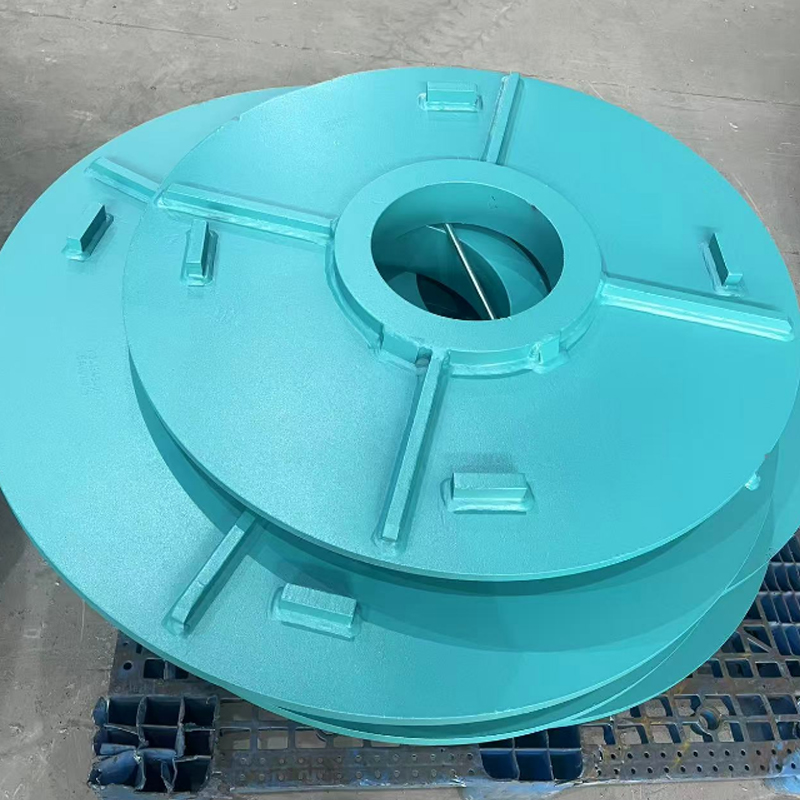
Supporting parts were on show as well: motor end closures, in standard and insulated bearing versions, and the motor centrifugal cooling fan. For marine customers, the related guide on corrosion protection design for marine motor housings explains how coatings and structure work together.
Motor Core, Rotor Core and Lamination Products from New Ruichi
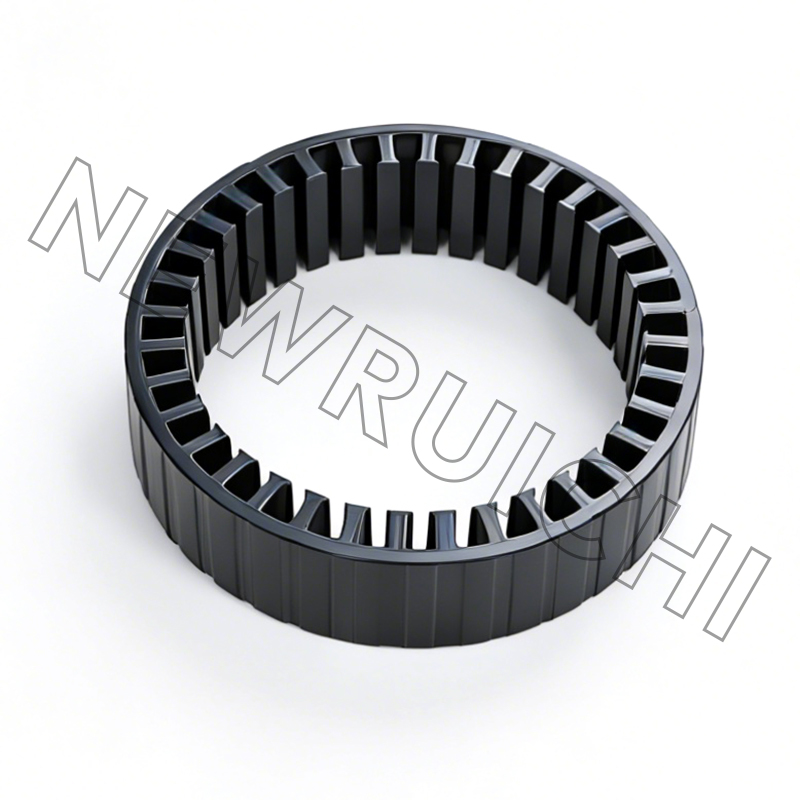
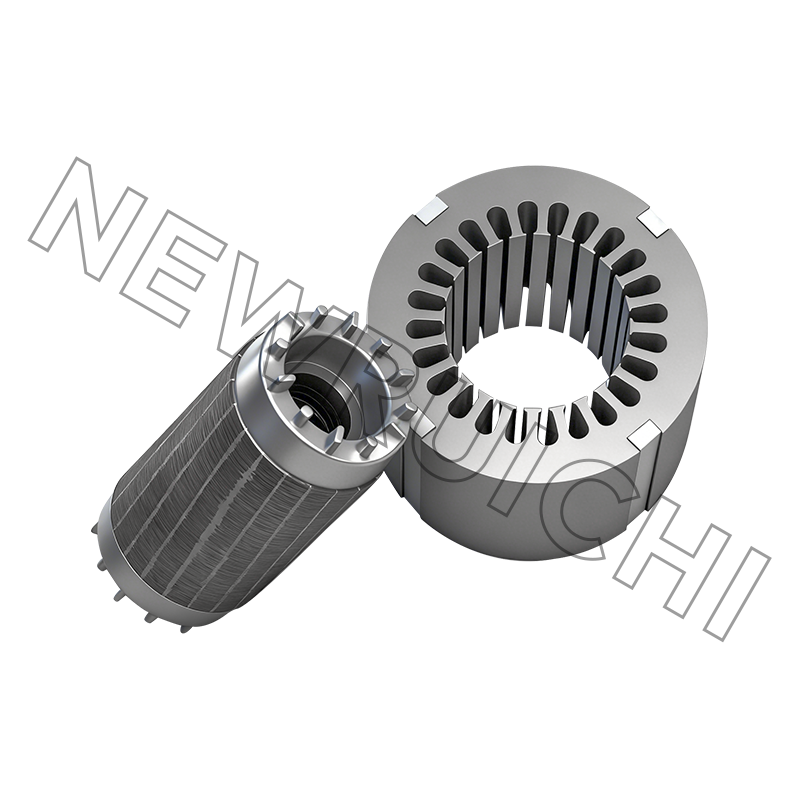
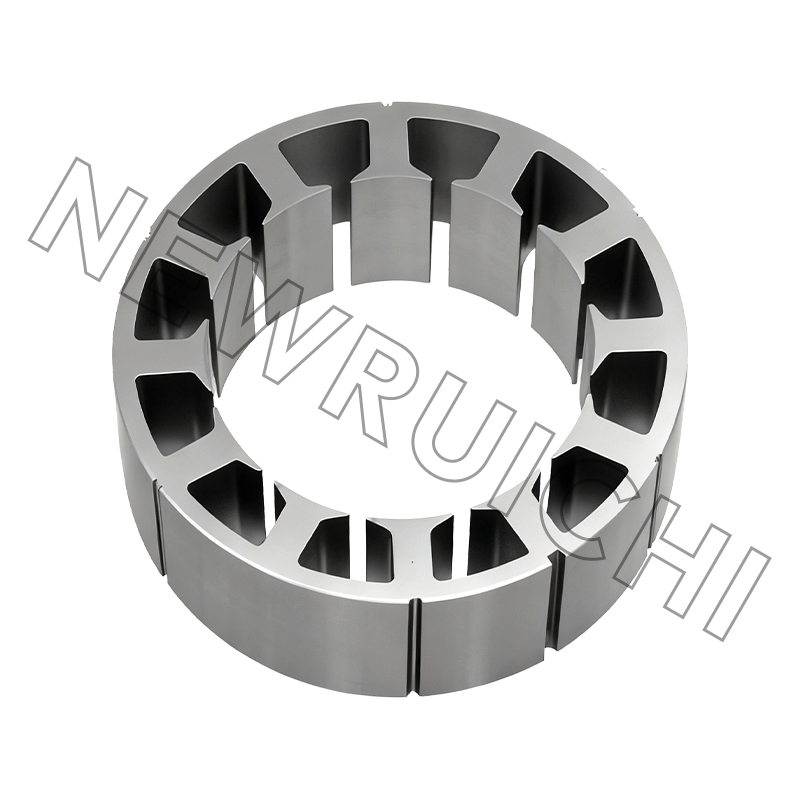
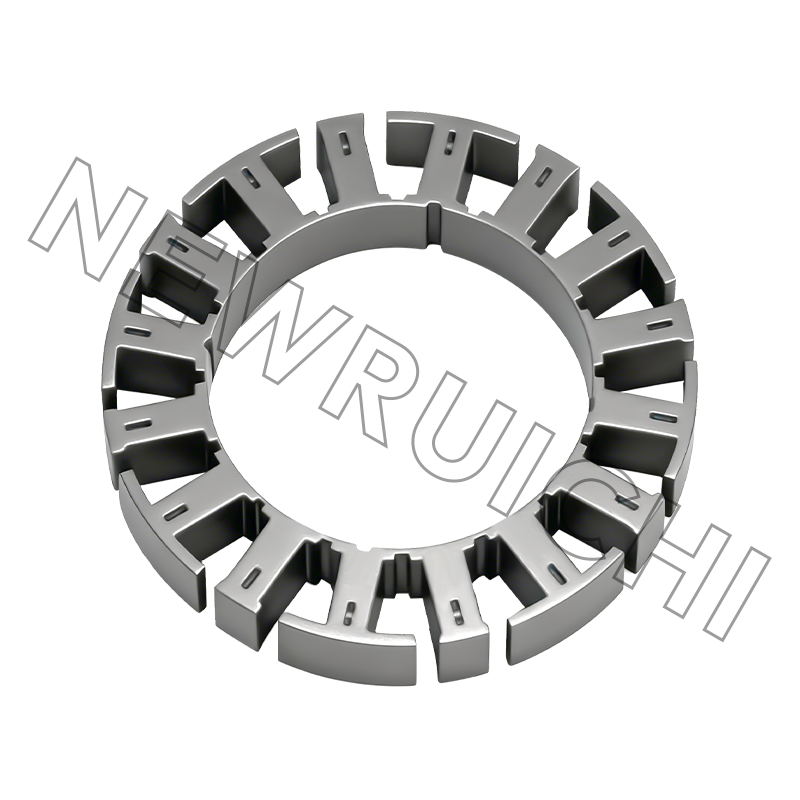
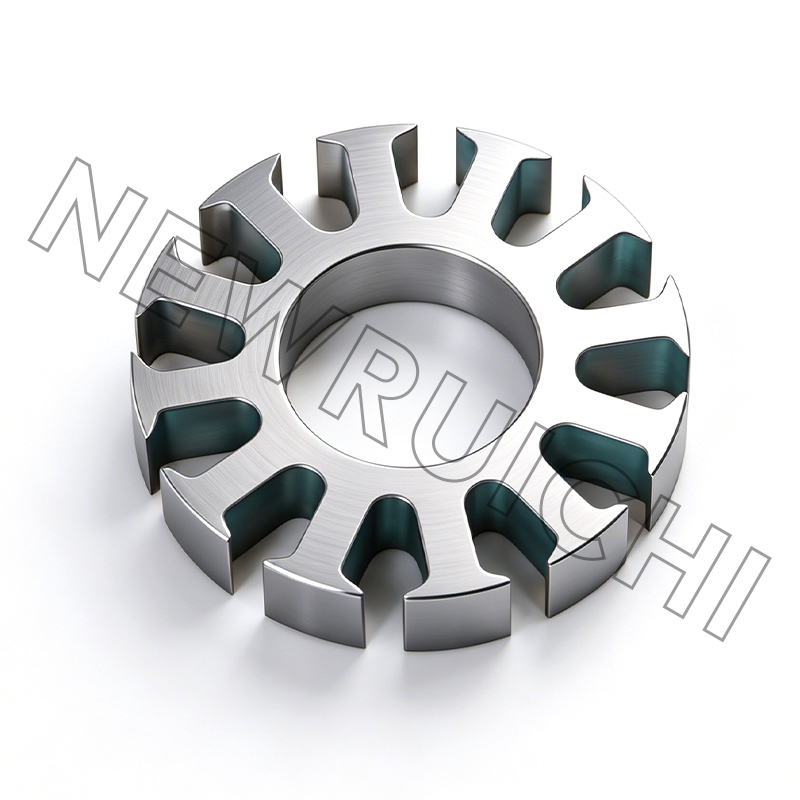
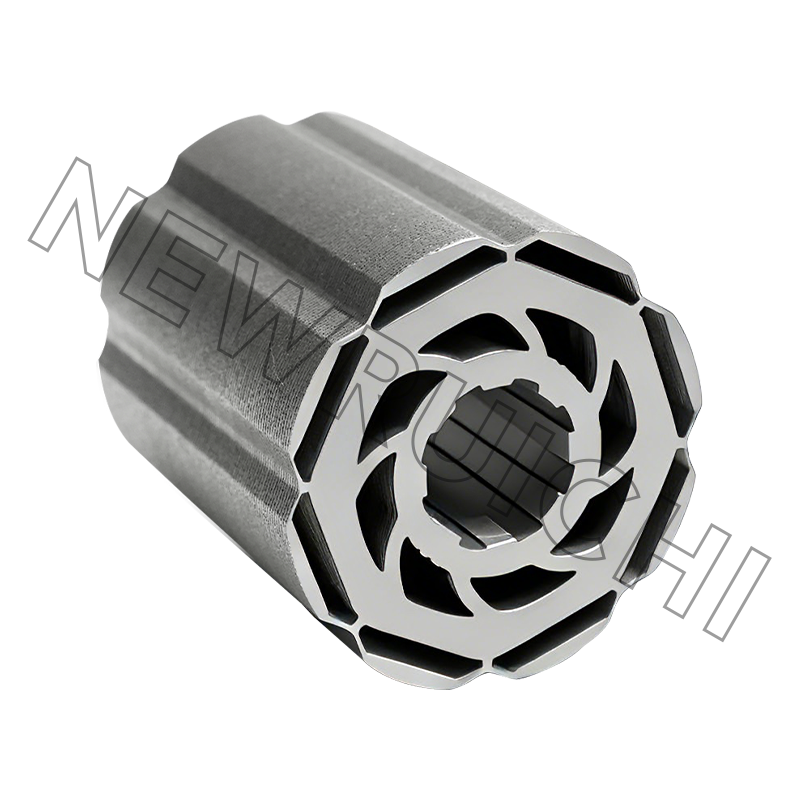
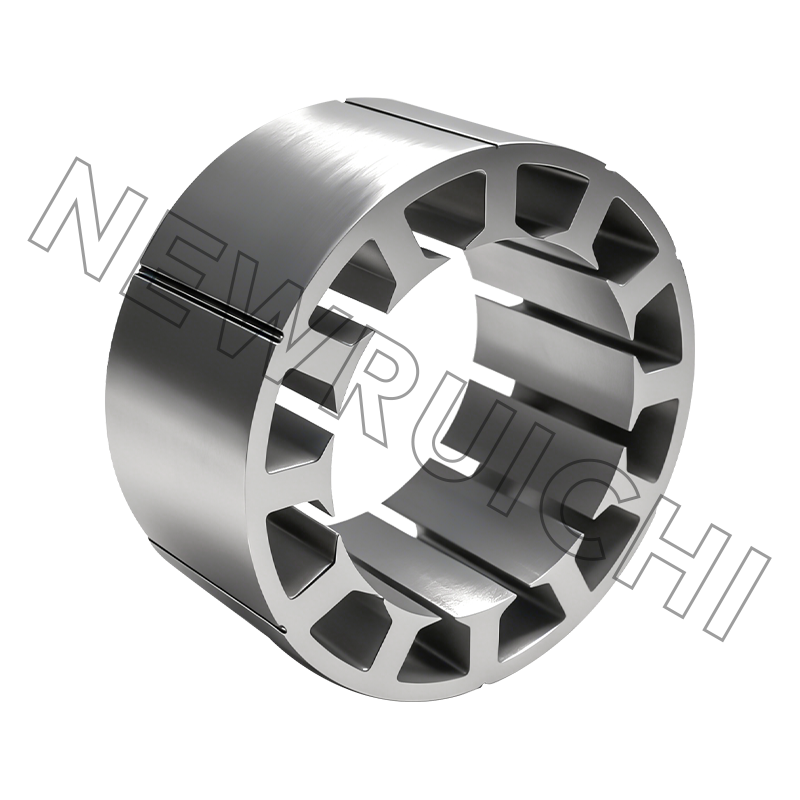
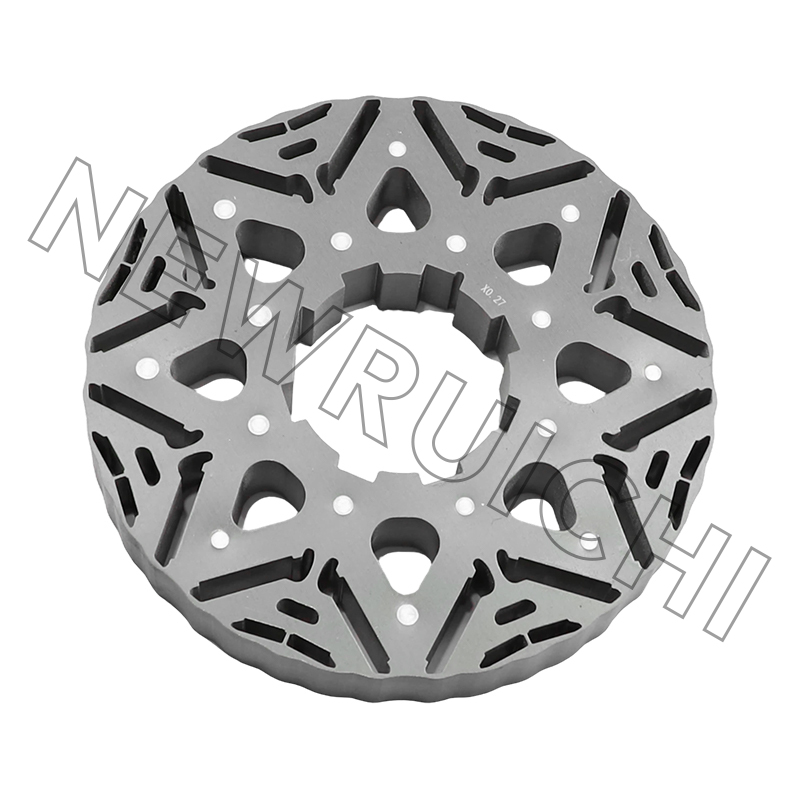
Founded in 2016, Wuxi New Ruichi Technology supplies precision laminations for wind power, new energy vehicles, rail transit and industrial drives. At the show, the company presented its motor stator and rotor core range, which includes:
- AC motor stator and rotor cores for industrial drives and generators.
- DC motor stator and rotor cores for applications that need strong starting torque and speed control.
- Servo motor cores and stepper motor cores for precision motion control.
- New energy vehicle motor cores for traction drives.
For buyers who want to cut assembly time, New Ruichi also displayed finished motor core assemblies in interlocked, laser or TIG-welded, and adhesive-bonded forms. Visitors interested in the interlocking method can find the details in our article on interlock laminated core precision and performance gains. The transformer lamination core line, with EI and C-type CRGO cores, completed the core exhibit.
Silicon Steel Supply Behind Every Lamination
Core performance starts with the steel. New Ruichi exhibited its silicon steel offering, which covers high-grade non-grain-oriented (NGO) silicon steel for rotating machines, medium and low-grade grain-oriented (GO) silicon steel for transformer cores, and material in roll, strip and sheet form.
Non-oriented steel suits stators and rotors because magnetic flux changes direction around the circumference. Grain-oriented steel performs best where flux follows one direction, as in transformer limbs. Matching the grade to the machine is one of the simplest ways to control core loss, and the engineering team was available to discuss grade selection for specific projects. Readers who want the background can start with the complete guide to silicon steel coils and materials.
Manufacturing Capability and Quality Assurance
Behind these products sit five stamping and joining processes: single-slot stamping, rotary notching, compound progressive stamping, laser welding and in-mold automatic torsion stacking. Each suits a different volume and precision requirement, which lets New Ruichi quote the route that fits a drawing instead of forcing every part through one process.
Quality control relies on coordinate measuring machines, 2D optical inspection and cleanliness testing, supported by the inspection equipment used during sampling. New Ruichi holds ISO 9001, IATF 16949 and ISO 14001 certifications and is recognized as a National High-Tech Enterprise and a Jiangsu Province specialized and innovative enterprise. Its products are exported to more than 40 countries and regions, including Germany, France, Italy and Brazil.
Custom Samples and Rapid Prototyping
Wind and drive projects rarely start with a finished drawing. New Ruichi therefore showed its stator and rotor core sample customization service, in which laser cutting machines turn a design into small-batch laminations and core samples before any stamping tool is built. Both laser-cut stator and rotor lamination samples and assembled core samples were part of the display.
The approach shortens development cycles and lets motor designers test a lamination geometry first and commit to tooling later. Visitors with a drawing or a target specification were welcome to discuss it with the engineering team.
One Product Range, Several Motor Applications
Taken together, the two product lines cover the structure of an electric machine from the inside out: laminated cores for the magnetic circuit, and welded motor housing and stator base structures for mechanical support. That combination matters for wind generators, but it applies equally to marine drives, high-voltage industrial motors and electric vehicle traction motors.
New Ruichi is also extending its lamination know-how into intelligent robotics and the low-altitude economy, where compact servo and stepper cores and lightweight cores for unmanned aerial platforms are in demand. Cailiang, for its part, serves customers who need large fabricated frames for wind, marine and high-voltage industrial motors.
| Company | Product Group | Typical Use |
|---|---|---|
| Wuxi Cailiang Machinery | Motor housing, stator base, motor frame | Wind, marine, high-voltage industrial motors |
| Wuxi Cailiang Machinery | End closure, motor fan | Bearing support, motor cooling |
| Wuxi New Ruichi Technology | Motor core, rotor core, lamination | AC, DC, servo, stepper, NEV motors |
| Wuxi New Ruichi Technology | Finished core assemblies, transformer cores, silicon steel | Ready-to-install cores, transformers |
What Buying Housing and Cores from One Group Means for Motor Makers
Motor manufacturers often source the frame from one supplier and the laminated core from another. Each handover adds a drawing review, a delivery schedule and an incoming inspection step. Presenting both at one stand allowed visitors to see how New Ruichi and Cailiang can reduce that coordination work for wind generator and industrial motor programs.
The practical benefits are easy to list. Fit between the stator core and the stator housing can be reviewed in one technical discussion rather than two. Sample cores and sample frames can be planned together, so prototype builds are not held up by one missing part. And finished core assemblies arrive ready to install, which is the main reason many motor makers are moving away from loose laminations; our article on why motor makers are switching to ready-to-install finished cores explains the reasoning, and a second piece shows how finished motor core assemblies improve efficiency and production.
For customers outside China, a supplier relationship still starts with clear technical input. Drawings, load cases, cooling concept, environmental conditions and target volumes are the details the engineering team asks for first. With these in hand, both companies can advise on structure, material and process, and can propose a sample plan before any order is placed.
Next Steps and How to Contact Us
With the show closed, the two companies are following up with the project enquiries and technical questions raised in Hamburg. Wuxi New Ruichi Technology Co., Ltd. and Wuxi Cailiang Machinery Co., Ltd. will continue to supply motor housing, stator housing, motor core and rotor core products to wind power and other demanding motor sectors worldwide.
If you could not visit us in Hamburg, you can still request a quotation, a catalogue or a custom sample. Browse the complete product catalogue to see the full range, then contact our engineering team with your drawing or specification, and we will respond with a technical proposal.
Your email address will not be published. Required fields are marked *


 Email: [email protected]
[email protected]
 Telephone/Phone:
+86-18861576796 +86-18261588866
+86-15305731515 +86-18861576796
Copyright © Wuxi New Ruichi Technology Co., Ltd. / Wuxi Cailiang Machinery Co., Ltd. All rights reserved.
Stator And Rotor Cores Manufacturers
