Industry knowledge
How Silicon Steel Coils Influence Motor Efficiency and Core Loss
In high-efficiency motors and generators, the electromagnetic behavior of silicon steel coils directly affects the overall energy conversion efficiency. Instead of focusing only on the chemical composition of the steel, manufacturers often pay closer attention to magnetic flux density, lamination thickness, and processing stability. These factors determine the balance between hysteresis loss and eddy current loss in the final laminated core. In modern electric drive systems, even small improvements in silicon steel performance can result in measurable reductions in energy consumption.
During motor production, silicon steel coils are processed into laminations through precision punching. The mechanical stress introduced during this stage can alter the magnetic domain structure of the material. For this reason, manufacturers working with high-grade silicon steel materials typically apply optimized punching clearance, die coatings, and stress-relief annealing processes. These measures help preserve the original magnetic characteristics of the steel and prevent deterioration of core loss performance.
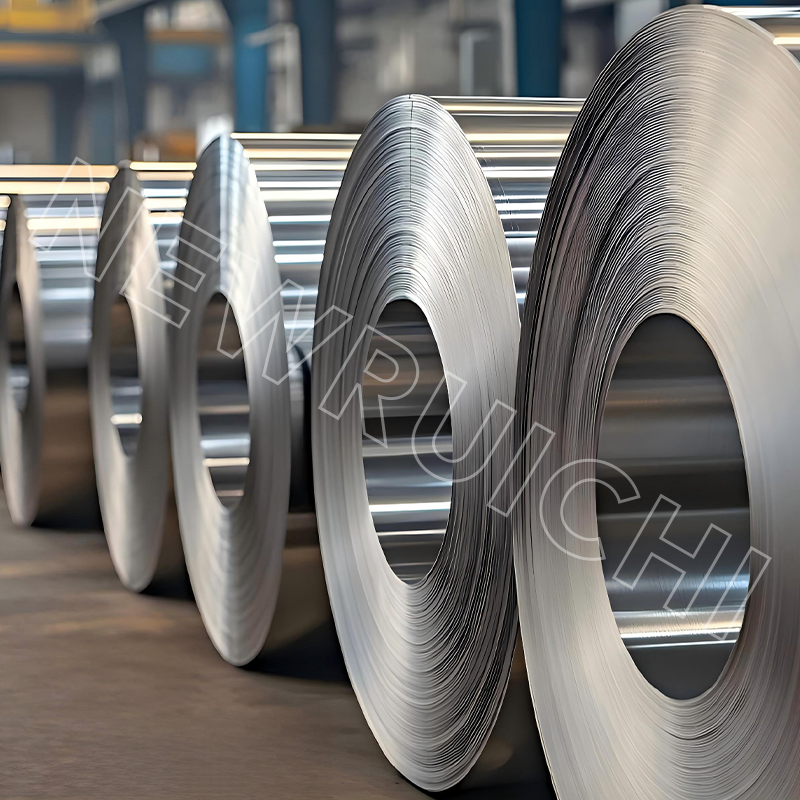
At Wuxi New Ruichi Technology Co., Ltd., silicon steel coils are processed through professional slitting and cross-cutting operations before entering the stamping stage. Consistent strip width, flatness, and surface quality are maintained so that the laminations produced later maintain uniform electromagnetic performance. This processing consistency provides a stable material foundation for applications such as traction motors, wind power generators, and high-efficiency industrial motors.
Processing Considerations for Non Oriented Silicon Steel in Electric Motor Cores
Non oriented silicon steel is widely used in rotating electrical machines because its magnetic properties remain relatively uniform in all directions of the sheet plane. However, practical performance is strongly affected by how the material is processed before it becomes part of a motor core. Factors such as burr height, lamination stacking accuracy, and interlaminar insulation quality all influence eddy current loss and thermal stability during operation.
In large production environments, non oriented silicon steel materials are often delivered in coils and then slit into narrower strips to match different stator and rotor designs. Maintaining uniform strip tension during slitting is essential because uneven stress may distort the sheet and lead to stacking gaps in the laminated core. Precise control of these mechanical parameters helps maintain dimensional accuracy in the final punched laminations.
- Stable insulation coating thickness between laminations helps reduce eddy current circulation.
- Controlled punching clearance minimizes burr formation and protects the coating layer.
- Accurate stacking and alignment prevent magnetic flux leakage in the assembled core.
- Consistent lamination thickness supports stable magnetic flux distribution.
By integrating material preparation and electric punching capabilities, Wuxi New Ruichi Technology Co., Ltd. supplies non oriented silicon steel materials that are ready for efficient stamping and lamination production. This approach supports reliable motor core manufacturing across industries including new energy commercial vehicles, automation control systems, and rail transit equipment.
Oriented silicon steel is commonly used in transformer cores because its grain structure is aligned during rolling and annealing processes. This orientation allows magnetic flux to travel with lower resistance along the rolling direction of the sheet, significantly reducing core loss in alternating magnetic fields. However, this performance advantage also requires careful handling during cutting and stacking operations.
When oriented silicon steel materials are used in transformer cores, maintaining the correct rolling direction becomes essential. Incorrect orientation during assembly can cause localized magnetic saturation, which leads to increased heat generation and reduced efficiency. As a result, manufacturers frequently implement strict identification and labeling systems to track the rolling direction from coil preparation through to final core assembly.
| Key Property |
Oriented Silicon Steel |
Manufacturing Consideration |
| Magnetic permeability |
Very high along rolling direction |
Core laminations must follow rolling orientation |
| Core loss |
Lower compared with non oriented grades |
Precise cutting required to avoid magnetic damage |
| Mechanical sensitivity |
Sensitive to stress |
Stress-relief annealing may be applied after cutting |
Companies that combine silicon steel material supply with precision processing capabilities are better positioned to support transformer manufacturers. Through controlled slitting, cross cutting, and inspection procedures, silicon steel coils can be converted into sheets that retain their magnetic properties while meeting strict dimensional requirements.
Material Consistency and Quality Control in Silicon Steel Supply
For manufacturers of electric motors and transformers, the consistency of silicon steel materials from batch to batch is often more important than isolated performance indicators. Variations in thickness tolerance, coating condition, or residual stress can introduce inconsistencies in magnetic behavior across the laminated core. Stable supply chains therefore focus on rigorous inspection procedures before the materials enter stamping or assembly lines.
Quality evaluation for silicon steel coils typically includes multiple verification steps. Magnetic property testing confirms core loss and permeability levels, while surface inspection ensures that the insulation coating remains intact. In addition, flatness measurements help prevent stacking defects during lamination assembly.
- Thickness tolerance measurement to maintain lamination accuracy.
- Magnetic testing to verify core loss and permeability consistency.
- Surface inspection to protect insulation coatings between laminations.
- Flatness evaluation to support high-precision electric punching processes.
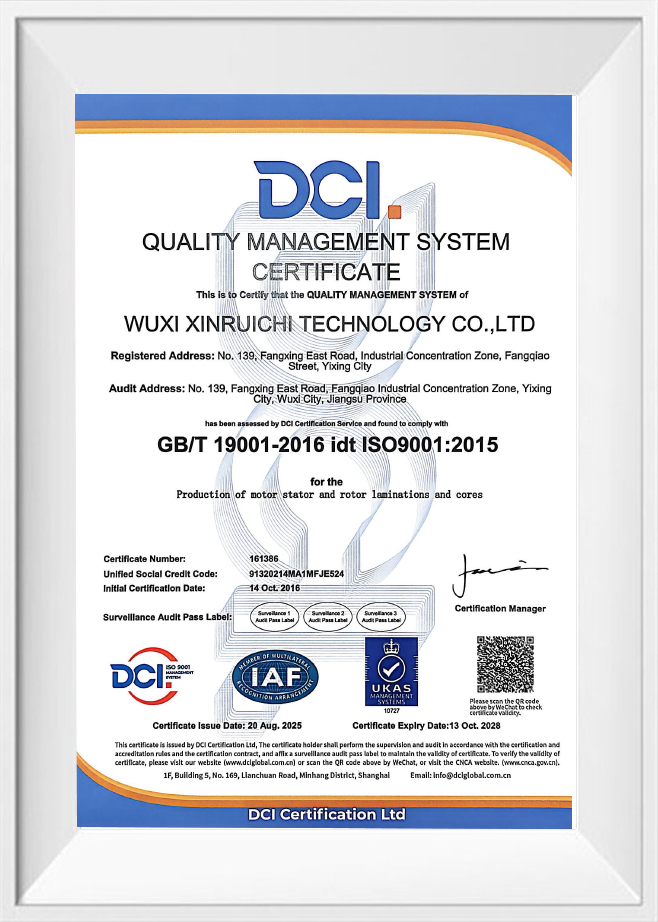
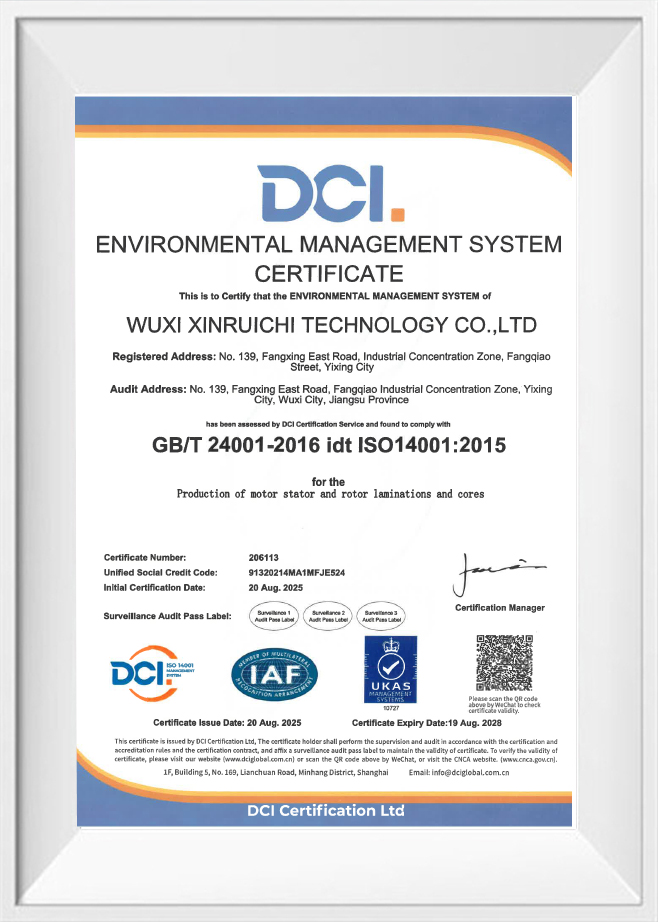
Wuxi New Ruichi Technology Co., Ltd. operates as both a manufacturer of electric punching and core products and a supplier of silicon steel materials. This integrated capability allows the company to maintain close control over material preparation and lamination production. With products widely applied in new energy vehicles, wind power generation systems, industrial energy-saving equipment, and rail transit technology, the company continues to expand its research and development investment.
Looking ahead, the company is increasing annual R&D investment to promote integrated innovation that combines AI technologies, smart manufacturing, and green energy solutions. Through these initiatives, Wuxi New Ruichi Technology Co., Ltd. aims to build stronger technological capabilities, maintain stable product performance, and support the development of smarter and more efficient production environments.

 en
en
 русский
 Deutsch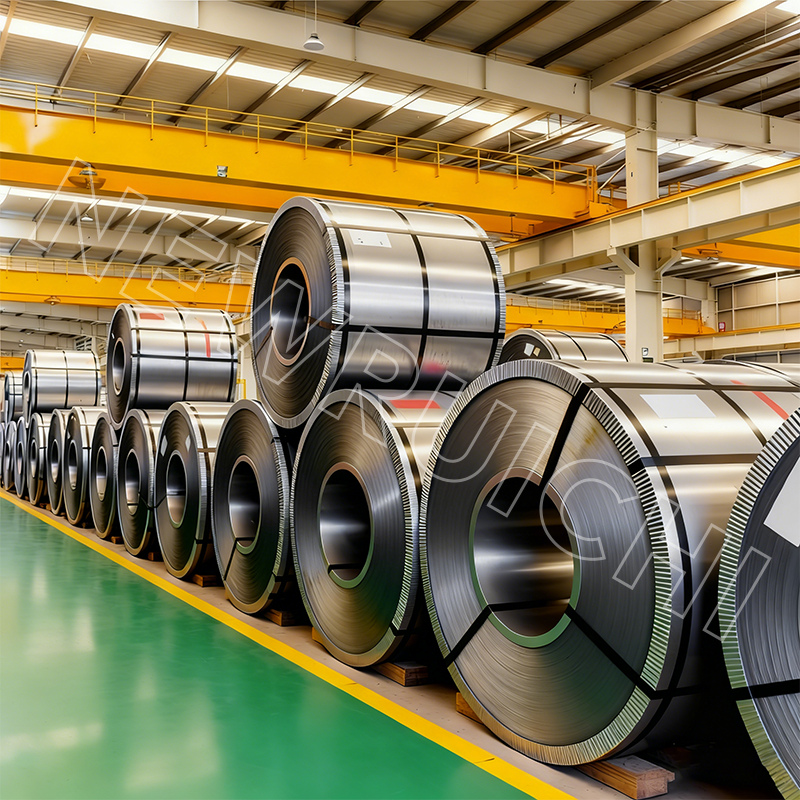



 Email:
  Telephone/Phone: