Industry knowledge
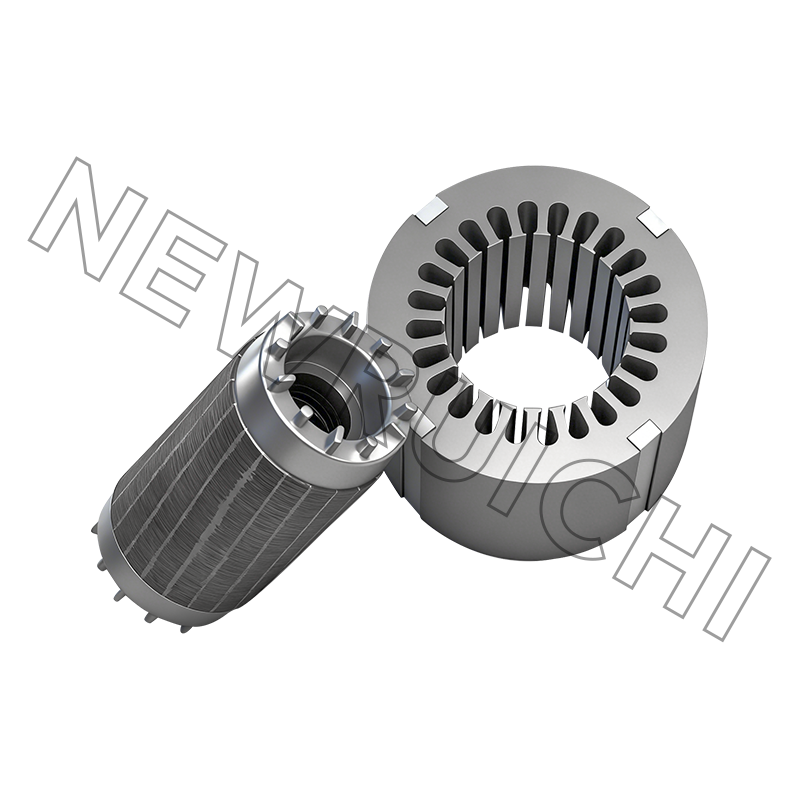
The efficiency of an electric motor is fundamentally tied to the magnetic circuit design, where the AC Motor Stator and Rotor Core play pivotal roles. In high-performance applications like new energy vehicles or humanoid robots, maximizing flux density while minimizing core loss is a delicate balancing act. We achieve this by utilizing ultra-thin, high-grade non-oriented silicon steel laminations, often ranging from 0.2mm to 0.35mm in thickness. At Wuxi New Ruichi Technology Co., Ltd., our precision stamping processes ensure that the grain structure of the steel remains intact, preventing micro-cracks that could increase hysteresis losses. This attention to material science allows us to deliver components that significantly reduce energy consumption in wind power motors and high-voltage industrial motors.
Beyond material selection, the geometry of the slots in both the stator and rotor dictates the harmonic content of the magnetic field. Poorly designed slot openings can lead to increased torque ripple and acoustic noise, which is unacceptable in passenger vehicles or rail transit systems. Our engineering team employs advanced finite element analysis (FEA) to optimize slot shapes—such as using closed or semi-closed slots—to smooth out the flux distribution. By leveraging the comprehensive industrial supporting capabilities of the Yangtze River Delta, we integrate these simulations directly into our tooling design phase, ensuring that every AC Motor Stator and Rotor Core we produce meets the rigorous dynamic requirements of modern drive systems.
Advanced Bonding Techniques for High-Speed Rotors
As motor speeds increase, particularly in UAVs and mining truck drivetrains, the centrifugal forces acting on the AC Motor Stator and Rotor Core become immense. Traditional welding methods can introduce thermal distortions and short circuits between laminations, degrading performance. To counter this, we have adopted self-bonding technologies where a specialized adhesive is applied between laminations and cured under heat and pressure. This creates a monolithic structure with superior mechanical integrity and uniform magnetic properties. Our facility, covering 80,000 square meters, is equipped with state-of-the-art bonding lines that allow us to scale production while maintaining the stable product quality our global customers rely on.
Comparison of Core Assembly Methods
| Assembly Method |
Mechanical Strength |
Magnetic Efficiency |
Ideal Application |
| Interlocking (Keying) |
High |
Moderate (Flux leakage at keys) |
Industrial Pumps, Fans |
| TIG/MIG Welding |
Very High |
Low (Heat affected zone losses) |
Low-speed Heavy Duty |
| Self-Bonding (Adhesive) |
High (Uniform) |
Very High (No shorts) |
EVs, UAVs, Robotics |
| Through-Bolting |
Moderate |
High (If insulated properly) |
Large Marine Motors |
The choice of assembly method directly impacts the lifecycle and reliability of the motor. For instance, in nuclear power motors where maintenance windows are rare, the stability of the core stack is paramount. We provide reliable mechanical basic components that utilize hybrid approaches when necessary, combining bonding with minimal welding for extra security in extreme environments. Our agile response speed ensures that we can adapt these manufacturing techniques to meet the specific prototyping or mass production needs of industry-leading enterprises.
Thermal Management Strategies in Core Integration
Heat generation in the AC Motor Stator and Rotor Core is a primary limiter of power density. While copper losses in windings are well-known, iron losses in the core contribute significantly to thermal load, especially at high frequencies. Effective thermal management begins with the core design itself. We incorporate axial and radial cooling channels directly into the lamination stack or utilize housing designs that maximize surface contact with the stator outer diameter. In collaboration with our subsidiary Wuxi Cailiang Machinery Co., Ltd., we have developed specialized solutions for marine vessel motors where saltwater cooling loops require exceptional corrosion resistance alongside thermal conductivity.
- Varnish Impregnation: Deep penetration of thermally conductive varnish fills air gaps between laminations and windings, creating a direct path for heat to escape the core.
- Liquid Cooling Jackets: Precision machining of the stator housing to allow close-coupled liquid cooling, essential for continuous duty cycles in mining trucks.
- Air Gap Optimization: Maintaining a precise air gap between the stator and rotor ensures efficient magnetic coupling while allowing for adequate airflow in air-cooled systems.
Our commitment to on-time delivery capability means that these thermal solutions are not just theoretical but are implemented efficiently in our production lines. Whether serving the rail transit sector with its demanding stop-start cycles or the wind power industry with its variable load profiles, our AC Motor Stator and Rotor Core assemblies are engineered to dissipate heat effectively. This ensures long-term operational stability and helps our partners achieve their sustainability goals through improved energy efficiency.

 en
en
 русский
 Deutsch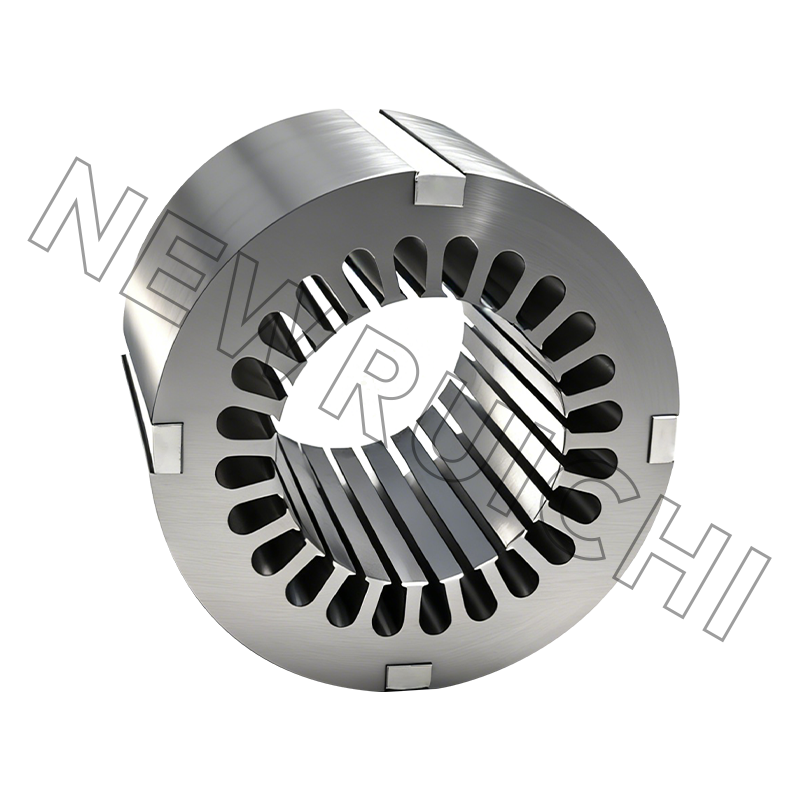


 Email:
  Telephone/Phone:
