Home / News / Industry News / Silicon Steel Coils & Materials: A Complete Guide
Industry News

Silicon Steel Coils & Materials: A Complete Guide


Silicon steel coils and silicon steel materials are the backbone of modern electrical engineering — used in transformers, motors, and generators where magnetic efficiency directly impacts energy consumption and operational cost. Choosing the right grade of silicon steel can reduce core losses by up to 30–50% compared to ordinary carbon steel, making material selection a critical engineering and commercial decision.

This guide covers what silicon steel is, how coils are produced, key grades and their performance data, and how to evaluate materials for specific applications.

What Silicon Steel Actually Is

Silicon steel — also called electrical steel or lamination steel — is a specialty iron-silicon alloy containing between 1.0% and 6.5% silicon by weight. The addition of silicon increases electrical resistivity (from ~10 µΩ·cm for pure iron to ~50–82 µΩ·cm for high-silicon grades), which reduces eddy current losses when the material is subjected to alternating magnetic fields.

Beyond silicon content, silicon steel materials are engineered along two structural lines:

  • Grain-Oriented (GO): Crystals are aligned in the rolling direction, giving superior magnetic permeability along one axis. Used almost exclusively in transformer cores.
  • Non-Grain-Oriented (NGO): Crystals are distributed randomly, providing uniform magnetic properties in all directions. Used in rotating machines — motors, generators, alternators.

The distinction matters enormously. A grain-oriented steel like M-5 (0.27 mm thick) will exhibit core losses of roughly 0.68 W/kg at 1.7 T, 60 Hz, whereas a non-oriented grade of similar thickness may show 2.5–3.5 W/kg under the same conditions.

How Silicon Steel Coils Are Manufactured

Silicon steel coils are the primary delivery format for electrical steel. They are produced through a tightly controlled metallurgical process that determines final magnetic performance.

Hot Rolling and Cold Rolling

The process begins with hot rolling steel slabs down to an intermediate thickness of 2.0–2.5 mm. For non-oriented grades, a single cold-rolling step reduces this to the target gauge (typically 0.35–0.65 mm). For grain-oriented grades, a two-stage cold rolling process with an intermediate annealing step is used to develop the Goss texture — the crystallographic orientation responsible for their superior directional permeability.

Annealing and Coating

Final annealing relieves internal stresses and completes grain growth. After annealing, coils receive a thin insulating coating — typically an inorganic phosphate or organic resin — to prevent interlaminar eddy currents when stacked into cores. Coating thickness is usually 1–3 µm per side, which keeps stacking factor (the ratio of magnetic material to total volume) above 95%.

Slitting and Coiling

Master coils up to 1,200 mm wide are slit to customer-specified widths, rewound, and strapped for shipment. Standard coil weights range from 3 to 10 metric tons, with inner diameters of 508 mm or 610 mm to suit stamping and cutting lines.

Key Grades and Performance Comparison

Silicon steel is graded by core loss (watts per kilogram) and thickness. The table below compares widely used grades from IEC and ASTM standards:

Core loss measured at 1.5 T, 50 Hz unless noted. Values are typical; consult mill certificates for specification guarantees.
Grade Type Thickness (mm) Core Loss (W/kg) Typical Application
M-5 (27MO60) Grain-Oriented 0.27 0.68 @ 1.7T, 60Hz Power transformers
M-6 (30M7) Grain-Oriented 0.30 0.79 @ 1.7T, 60Hz Distribution transformers
35W270 Non-Oriented 0.35 2.70 High-efficiency motors (IE3/IE4)
50W470 Non-Oriented 0.50 4.70 Standard industrial motors
65W800 Non-Oriented 0.65 8.00 Small appliance motors, ballasts

The IEC naming convention encodes both thickness and core loss. For example, 35W270 = 0.35 mm thick, 2.70 W/kg at 1.5 T, 50 Hz. This makes cross-supplier comparison straightforward when sourcing coils.

Selecting Silicon Steel Materials for Specific Applications

Matching silicon steel material to application is not just a matter of choosing the lowest core loss. Other factors — mechanical properties, operating frequency, flux density requirements, and cost — all influence the optimal choice.

Power and Distribution Transformers

Grain-oriented silicon steel is the only viable option for transformer cores operating at 50–60 Hz. The preference is for thinner gauges (0.23–0.30 mm) with Hi-B (high permeability) treatment, which produces induction levels of 1.88–1.93 T at H = 800 A/m — approximately 5–8% higher than conventional GO grades. This higher flux density allows transformer designers to reduce core cross-section, cutting material weight and cost.

Electric Vehicle (EV) Motors

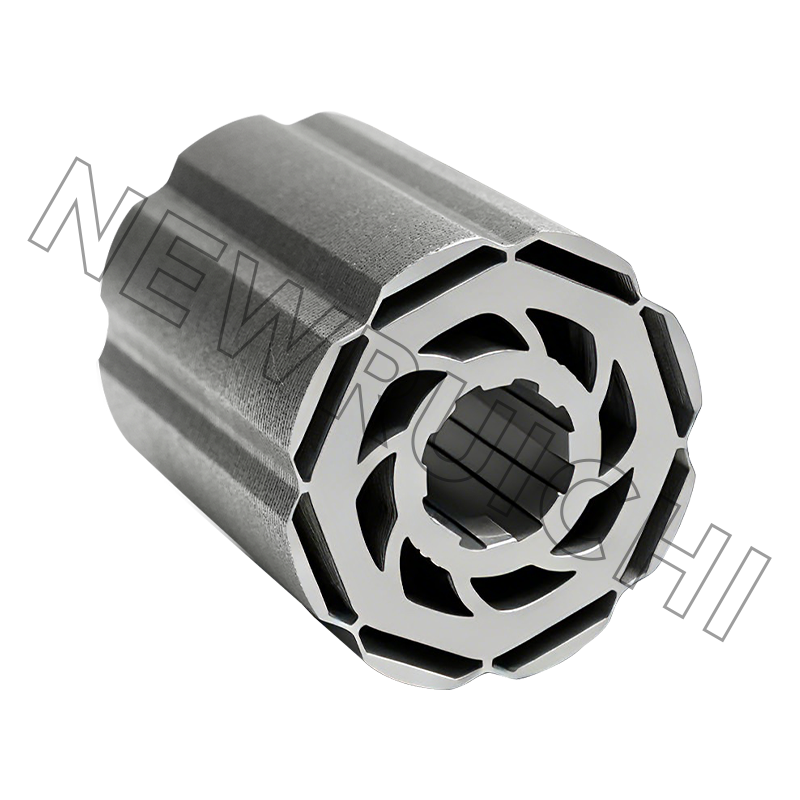
EV traction motors operate at frequencies of 400–1,000 Hz, far above the 50/60 Hz baseline for which standard electrical steel grades are optimized. At high frequencies, eddy current losses scale with the square of frequency and the square of lamination thickness. This drives EV motor designers toward ultra-thin non-oriented grades of 0.20–0.25 mm, with some designs using 6.5% silicon steel (produced by CVD or spray alloying) to push resistivity to ~82 µΩ·cm. A 2023 study by a major automotive supplier found that switching from 0.35 mm to 0.20 mm NGO steel in an 800V motor platform reduced iron losses by approximately 40% at peak operating speed.

Industrial Motors and Generators

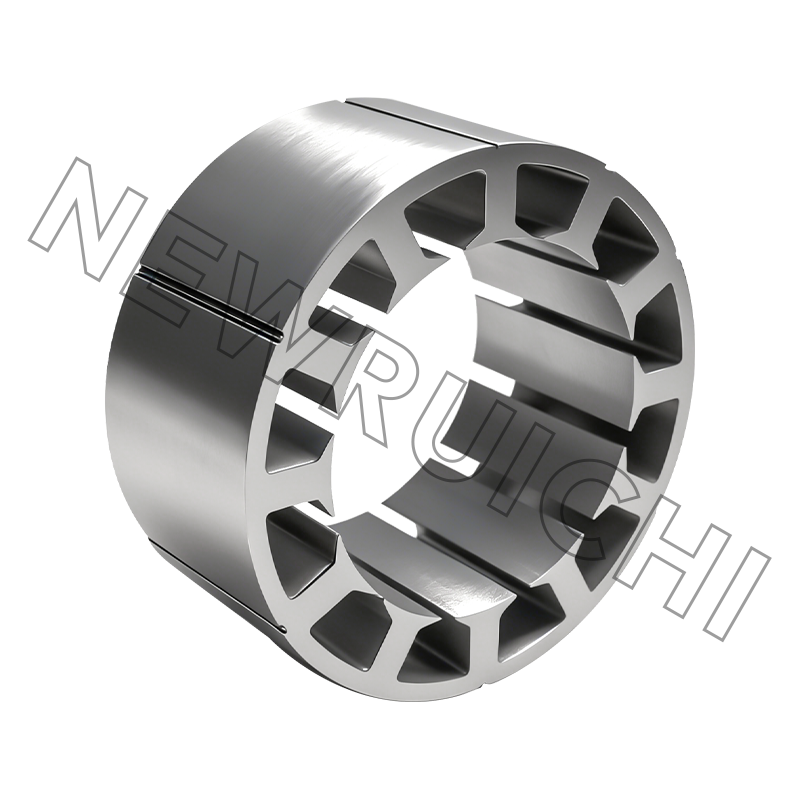
For standard induction motors operating at fixed 50/60 Hz from the grid, 0.50 mm non-oriented grades (50W470 or equivalent) represent the best balance of cost and performance. Where motors must meet IE3 or IE4 efficiency classes under IEC 60034-30-1, upgrading to 0.35 mm grades typically provides the necessary reduction in stator core losses to cross the efficiency threshold.

High-Frequency Applications (Inverters, Chokes)

At frequencies above 1 kHz, conventional silicon steel materials become impractical. Amorphous metal alloys and nanocrystalline materials take over, but for the 400 Hz–1 kHz range, thin-gauge (0.10–0.20 mm) silicon steel coils remain competitive and significantly cheaper than amorphous alternatives. The key specification to request is core loss at the actual operating frequency, not just the standard 50 Hz value.

Critical Specifications When Sourcing Silicon Steel Coils

When placing a purchase order or evaluating a supplier's mill certificate for silicon steel coils, the following parameters should be explicitly verified:

  • Core loss (W/kg): At the specified induction level and frequency. Request Epstein frame or Single Sheet Tester (SST) data per IEC 60404-2.
  • Magnetic polarization (J or B): Minimum guaranteed induction at specified field strength (e.g., J800 ≥ 1.80 T for HGO grades).
  • Thickness tolerance: IEC 60404-8-7 specifies ±0.02 mm for most cold-rolled grades. Tighter tolerances may be required for precision stamping.
  • Coating type and weight: Specify C2, C3, C4, or C5 per IEC 60404-15 depending on whether the coating must also serve as a stress coating (for GO steel) or provide corrosion protection.
  • Stacking factor: Should be ≥ 95% for standard coatings; critical for calculating actual magnetic cross-section in core designs.
  • Coil dimensions: Specify outer diameter (max), inner diameter, coil width, and weight per coil to ensure compatibility with your slitting or stamping equipment.

Suppliers who cannot provide Epstein frame test data traceable to a recognized standard should be treated with caution. Core loss values can vary by 10–20% between coils if process controls are inadequate, directly impacting the performance of finished transformers or motors.

Processing Silicon Steel Coils: Stamping, Cutting, and Handling

Silicon steel's higher silicon content makes it harder and more brittle than ordinary cold-rolled steel. Processing requires attention to tooling and handling practices to avoid degrading magnetic properties.

Stamping and Punching

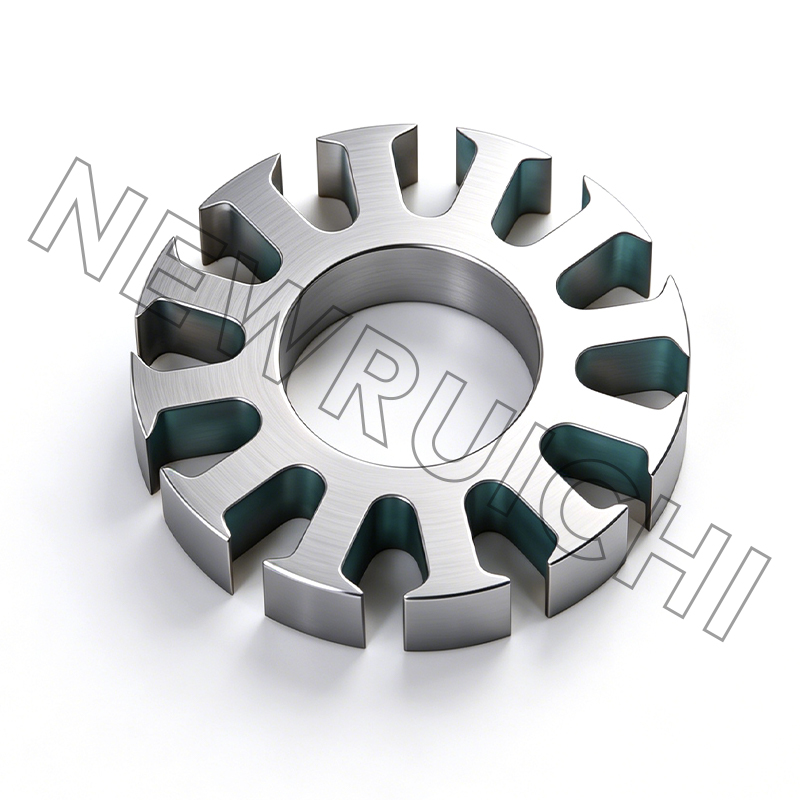
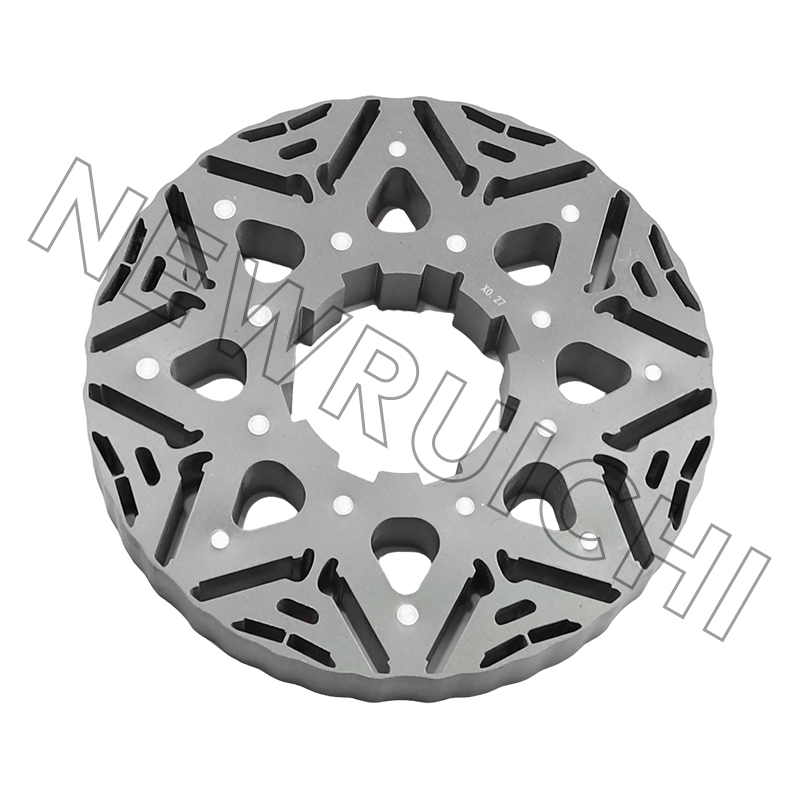
Progressive die stamping is the standard method for producing laminations from silicon steel coils. Tool life is typically 30–50% shorter than for equivalent carbon steel work due to higher silicon content. Carbide tooling is recommended for high-volume production. Burr height should be controlled to below 0.05 mm to maintain stacking factor; excessive burrs create shorts between laminations, increasing effective core losses in service.

Laser and Wire EDM Cutting

For prototype runs or complex shapes, laser cutting is widely used, but it introduces a heat-affected zone (HAZ) of 0.1–0.3 mm width along cut edges where magnetic properties are degraded. For grain-oriented silicon steel in particular, edge degradation from laser cutting can increase apparent core loss in small samples by 15–25%. Stress-relief annealing at 800–820°C in a dry hydrogen atmosphere after cutting can recover most of this loss.

Coil Storage and Handling

Silicon steel coils should be stored vertically (on edge) to prevent coil set from deforming the inner wraps. Humidity above 70% RH can cause surface rust that damages the insulating coating — particularly for C2 and C3 coatings not designed for aggressive environments. Coils should be consumed within 6–12 months of manufacture if stored in ambient conditions; longer storage requires moisture-barrier packaging or controlled environments.

Market Trends and Emerging Silicon Steel Materials

The silicon steel market is evolving rapidly, driven by electrification of transportation and tightening energy efficiency regulations.

6.5% Silicon Steel

Conventional processing limits practical silicon content to about 3.5% due to brittleness, but 6.5% silicon steel — produced via chemical vapor deposition (CVD) of SiCl₄ onto 3% silicon steel strip — achieves near-zero magnetostriction and very low core losses at high frequencies. Core losses at 1.0 T, 1,000 Hz are approximately 20 W/kg for 0.10 mm thick 6.5% Si steel, versus 60–80 W/kg for standard 0.35 mm NGO grades. Commercial production remains limited, keeping prices at a significant premium (3–5× standard grades), but adoption in high-frequency inductors and EV motors is growing.

Domain-Refined Grain-Oriented Steel

Leading producers including Nippon Steel, Thyssenkrupp, and AK Steel now offer domain-refined HGO grades where laser scribing or plasma scribing refines magnetic domains after final annealing, further reducing core losses by 5–10% versus standard HGO without changing thickness or chemistry. These grades are increasingly specified for large power transformers where even small efficiency gains translate to millions in lifecycle energy savings.

Ultra-Thin Non-Oriented Grades for EV Applications

Several steelmakers have introduced 0.20 mm and 0.25 mm NGO grades specifically targeted at EV traction motors, with optimized chemistry and texture to balance high permeability and low losses at 400–800 Hz. Global demand for these grades is projected to grow at over 20% annually through 2030 as EV production scales, creating supply chain pressure that buyers should factor into procurement planning.

Cost Considerations and Total Cost of Ownership

Silicon steel coil pricing reflects thickness, grade, and silicon content. As a general reference for non-oriented grades on the spot market:

  • 65W800 (0.65 mm): Lowest cost, suitable for cost-driven applications with relaxed efficiency requirements.
  • 50W470 (0.50 mm): ~15–20% premium over 65W800; the workhorse of industrial motor production.
  • 35W270 (0.35 mm): ~30–45% premium over 65W800; required for IE3/IE4 motors.
  • Grain-oriented HGO (0.27–0.30 mm): Typically 2–3× the cost of NGO grades.
  • 6.5% silicon steel (0.10–0.20 mm): 3–5× the cost of standard NGO grades.

However, material cost is only one component. In a distribution transformer with a 30-year service life, core losses can account for $50,000–$200,000 in energy costs over the asset's lifetime at typical utility rates. Upgrading from M-6 to M-5 grain-oriented steel increases material cost by roughly 5–8% but reduces no-load losses by 10–15%, yielding a payback period of 2–4 years in most utility pricing scenarios. Total cost of ownership analysis almost always favors higher-grade silicon steel materials when the equipment operates continuously.


Contact Us

Your email address will not be published. Required fields are marked *

New ruichi Products
Cailiang Products