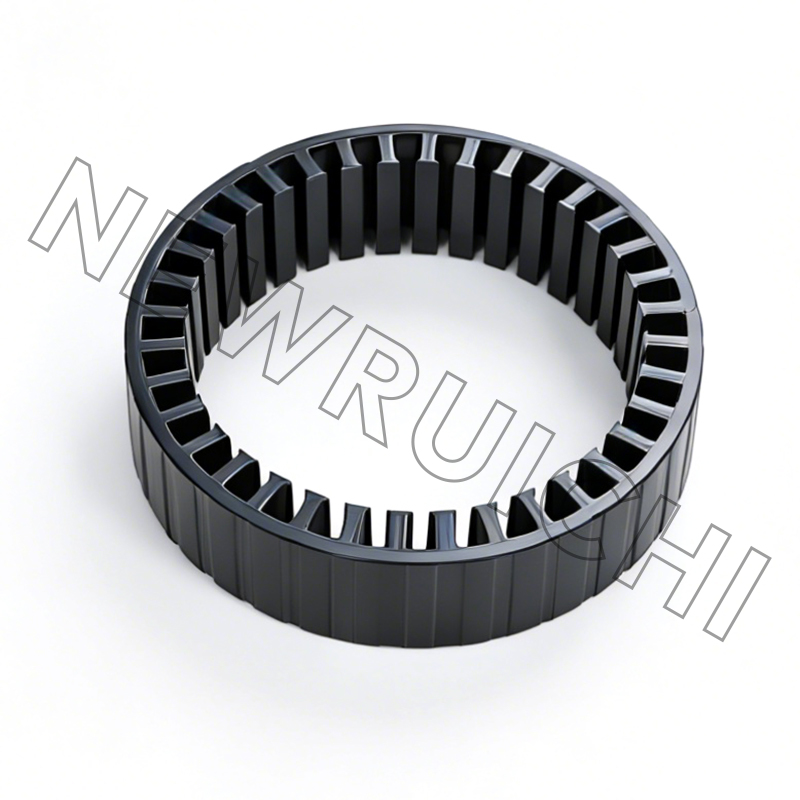
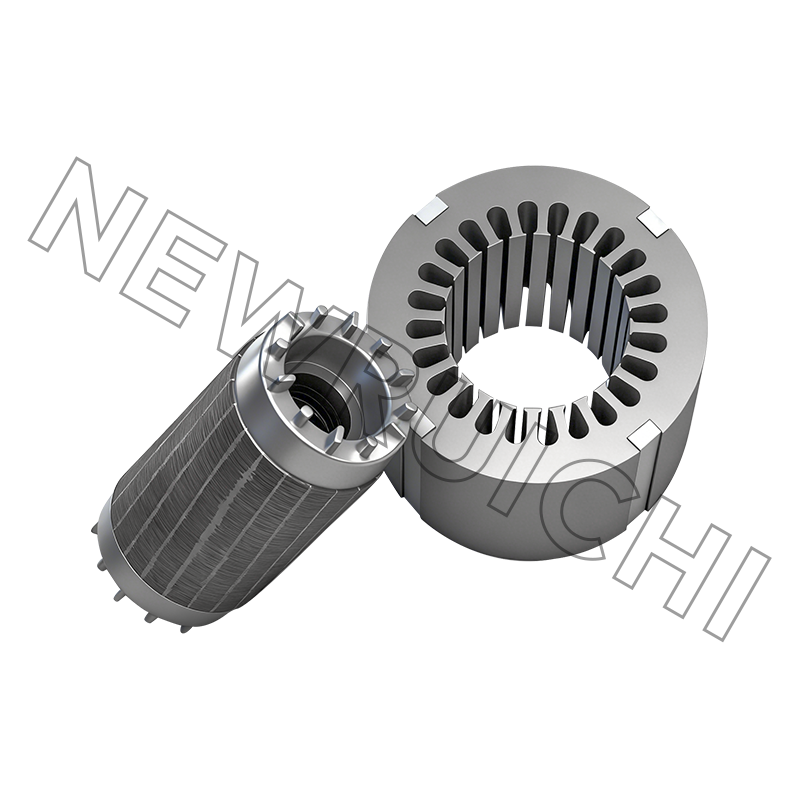
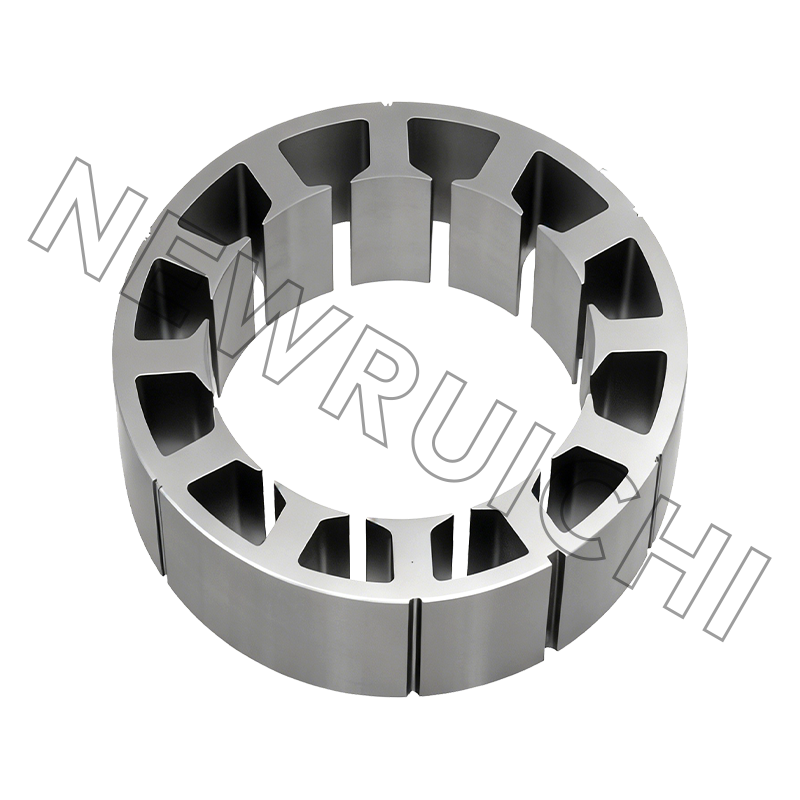
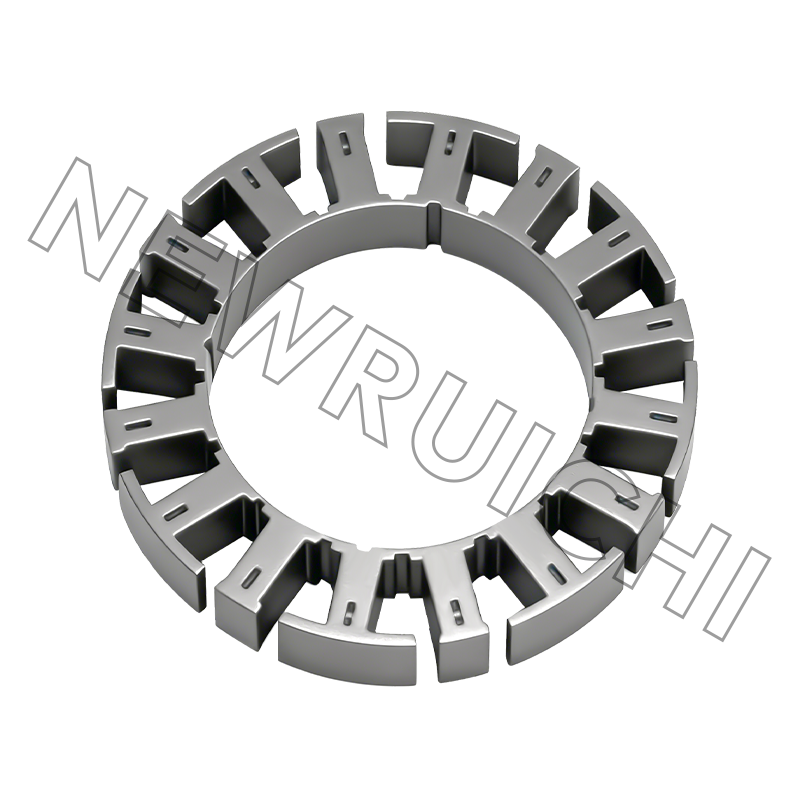
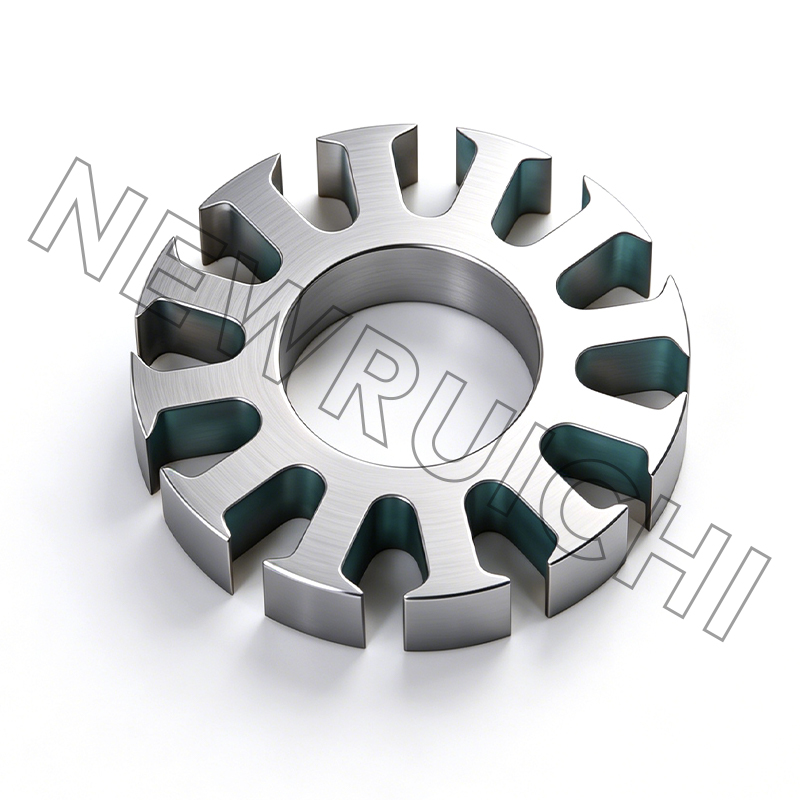
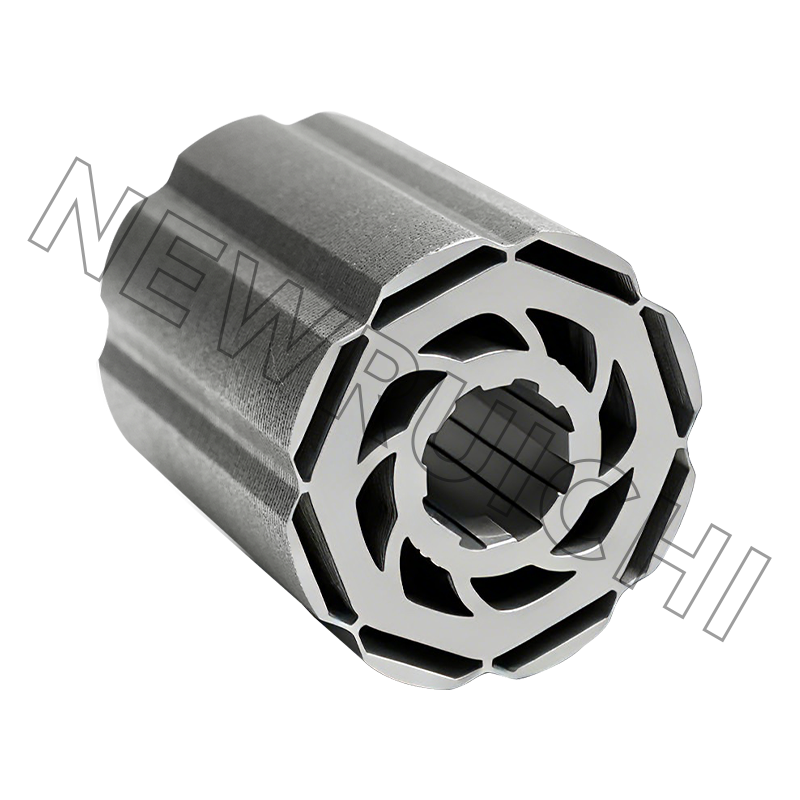
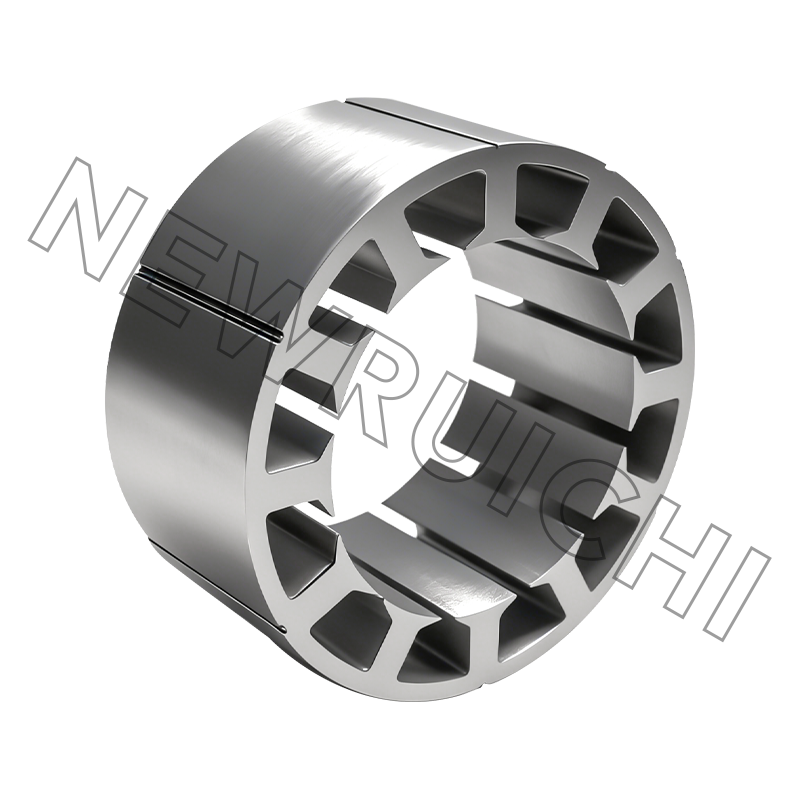
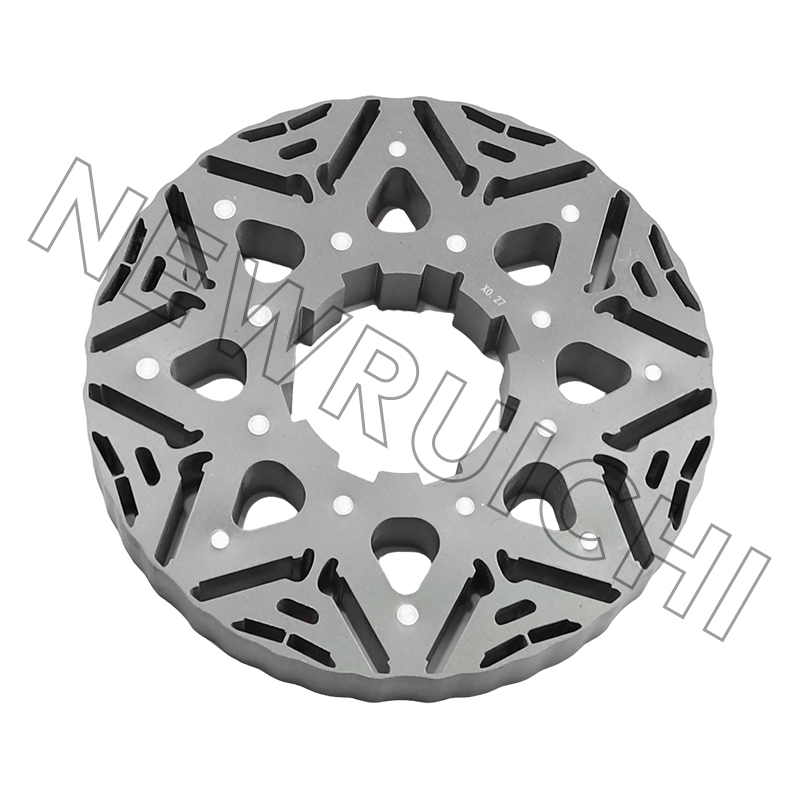
The motor stator core is the stationary magnetic structure at the heart of every electric motor — and its laminated construction is the single most important factor in determining motor efficiency, heat generation, and power density. Electric motor laminations are thin sheets of silicon steel, typically 0.2–0.65mm thick, stacked and bonded together to form the stator core. This laminated structure exists specifically to suppress eddy current losses that would otherwise convert a significant fraction of the motor's input power into waste heat. Selecting the right lamination material, thickness, and stacking method directly determines where a motor lands on the efficiency spectrum — from a basic industrial unit to a high-performance EV drive motor.
Content
The stator core is the fixed outer magnetic circuit of an electric motor. Its function is to carry the alternating magnetic flux generated by the stator windings, providing a low-reluctance path that concentrates and directs the magnetic field across the air gap to interact with the rotor. This magnetic interaction is what produces torque — the fundamental output of any electric motor.
Structurally, a motor stator core consists of a cylindrical yoke (the back-iron that completes the magnetic circuit) and a series of teeth projecting inward toward the rotor, between which copper windings are seated in the slots. The geometry of these teeth and slots — their number, width, depth, and the ratio between them — governs the motor's torque characteristics, winding space factor, and acoustic behavior. In a typical 4-pole induction motor, the stator may have 36 slots; a high-pole-count servo motor might have 48 or more.
The core must simultaneously achieve two competing goals: high magnetic permeability (to carry flux with minimal resistance) and low core loss (to minimize energy dissipated as heat during each magnetic cycle). The laminated silicon steel construction is the engineering solution that optimizes both within practical manufacturing constraints.
If a stator core were machined from a single solid block of steel, it would be electrically conductive throughout its volume. The alternating magnetic field passing through the core would induce circulating currents — eddy currents — within the bulk material, exactly as a transformer's varying flux induces current in a secondary winding. These eddy currents flow in closed loops perpendicular to the magnetic flux direction, and because steel has electrical resistance, they dissipate energy as I²R heat.
The power lost to eddy currents scales with the square of both the lamination thickness and the operating frequency. Halving the lamination thickness reduces eddy current losses by approximately 75%. This relationship makes lamination thickness one of the most consequential design variables in electric motor engineering — particularly as operating frequencies increase in variable-speed drives and high-speed applications.
Total core loss in a stator lamination has two components:
By slicing the core into thin laminations electrically insulated from one another, the eddy current paths are confined to individual thin sheets. The cross-sectional area available for eddy current circulation is dramatically reduced, and losses fall accordingly. A stack of 0.35mm laminations will exhibit roughly 25–30 times lower eddy current losses than a solid core of the same dimensions operating at the same frequency.
The dominant material for stator laminations is electrical steel — a family of iron-silicon alloys formulated specifically for magnetic applications. Silicon content (typically 1–4.5% by weight) serves two purposes: it increases the electrical resistivity of the steel (reducing eddy current losses) and reduces magnetostriction (the dimensional change steel undergoes during magnetization, which is the primary source of motor hum and audible noise).
Electrical steel is produced in two broad categories. Non-oriented (NO) electrical steel has a random grain structure, giving it approximately uniform magnetic properties in all directions within the plane of the sheet. This isotropy is essential for rotating machine stators, where the magnetic flux rotates through the core as the motor operates — the material must perform equally well regardless of flux direction. Virtually all motor stator laminations use non-oriented grades.
Grain-oriented (GO) electrical steel, by contrast, is processed to align grains along one axis (the rolling direction), achieving very low core loss in that direction. It is primarily used in transformer cores, where flux direction is fixed, and is not suitable for rotating machine stators.
Lamination thickness selection is a balance between core loss performance and manufacturing cost. Thinner laminations reduce losses but increase the number of sheets required, raise stamping and stacking costs, and require tighter dimensional tolerances.
| Thickness | Relative Core Loss | Operating Frequency | Typical Application |
|---|---|---|---|
| 0.65 mm | High | 50–60 Hz | Low-cost industrial motors, fans, pumps |
| 0.50 mm | Moderate | 50–400 Hz | General-purpose AC induction motors |
| 0.35 mm | Low | Up to 800 Hz | Servo motors, HVAC, IE3/IE4 efficiency motors |
| 0.27 mm | Very Low | Up to 1,000 Hz | EV traction motors, high-speed spindle motors |
| 0.20 mm | Ultralow | 1,000 Hz+ | Aerospace, premium EV motors, high-frequency drives |
For applications demanding the absolute minimum core loss — particularly high-frequency motors above 1 kHz — amorphous metal alloys (such as Metglas 2605SA1) offer core losses approximately 70–80% lower than the best conventional silicon steel grades. Amorphous metals are produced by rapid solidification from a melt, which prevents crystalline grain formation and produces a glassy atomic structure with exceptionally low hysteresis loss. The trade-off is that amorphous ribbon is produced in very thin strips (typically 0.025mm), is brittle, and is significantly more expensive and difficult to stamp than conventional electrical steel. Nanocrystalline alloys offer a middle ground — lower core loss than silicon steel, more processable than fully amorphous materials.
The production of stator laminations involves several closely controlled manufacturing stages, each of which affects both the dimensional accuracy and the magnetic performance of the finished core.
Progressive die stamping is the dominant production method for high-volume stator laminations. A coil of electrical steel strip is fed through a multi-stage press tool that progressively punches the slot openings, outer profile, keyways, and any other features in sequential stations before the finished lamination is blanked out at the final station. Stamping speeds of 200–600 strokes per minute are common for laminations up to 200mm diameter; larger laminations require slower rates to maintain dimensional accuracy.
Die clearance — the gap between punch and die — is critical for lamination quality. Excessive clearance causes burring on the cut edge, which increases inter-laminar contact and creates short-circuit paths for eddy currents between adjacent laminations, directly degrading core loss performance. Industry standard calls for burr heights below 0.05mm for most motor lamination applications; tighter limits apply to thin high-frequency laminations.
For prototype and small-batch lamination production, laser cutting and wire electrical discharge machining (EDM) are the primary alternatives to stamping. Laser cutting offers fast turnaround and no tooling cost, but the heat-affected zone along cut edges modifies the electrical steel's microstructure — increasing local core loss by 15–30% at the cut edges. This effect is proportionally more significant in narrow teeth, where the heat-affected zone represents a larger fraction of the total cross-section. Post-cut annealing at 750–850°C in a controlled atmosphere can recover much of the lost performance.
Individual laminations must be consolidated into a rigid core stack. The main methods are:
The slot and tooth geometry of a stator lamination is one of the most consequential design decisions in motor engineering. It simultaneously affects copper fill factor, magnetic flux density distribution, leakage inductance, cogging torque, and audible noise — making slot design an optimization problem that balances multiple competing requirements.
The slot opening — the gap between adjacent tooth tips at the air gap surface — is a key design variable. Open slots allow preformed coils to be inserted easily but create large flux density variations at the air gap (slotting harmonics), increasing torque ripple and audible noise. Semi-closed slots (partially bridged tooth tips) reduce slotting effects at the cost of slightly more difficult winding insertion. Closed slots minimize slotting harmonics entirely but require the winding wire to be threaded through small openings, limiting conductor size and reducing achievable fill factor.
For permanent magnet synchronous motors (PMSMs) used in EV applications, semi-closed slots with a tooth tip width chosen to minimize cogging torque interaction with the rotor magnets are standard practice. The slot opening is typically set to 1–2 times the magnet pole pitch divided by the slot number, a relationship derived from harmonic analysis of the air gap flux density.
The stacking factor (also called the lamination fill factor) is the ratio of actual magnetic steel volume to the total geometric volume of the core, accounting for the insulating coating between laminations. A typical stacking factor for well-produced motor laminations is 0.95–0.98 — meaning 95–98% of the core cross-section is active magnetic material.
A lower-than-expected stacking factor — caused by excessive burrs, thick insulation coatings, or poor stacking practice — reduces the effective flux-carrying cross-section of the core, forcing the iron to operate at higher flux densities than designed. This drives the core further up the B-H curve toward saturation, increasing both core loss and magnetizing current and degrading power factor and efficiency.
The rapid growth of electric vehicles and the tightening of global motor efficiency standards (IEC 60034-30-1, which defines IE3 and IE4 efficiency classes) have driven significant advancement in stator lamination technology over the past decade.
| Grade (Example) | Thickness | Core Loss @ 1.5T, 50Hz | Key Application | Relative Cost |
|---|---|---|---|---|
| M530-65A | 0.65 mm | 5.30 W/kg | Low-cost industrial motors | Low |
| M470-50A | 0.50 mm | 4.70 W/kg | Standard AC induction motors | Low–Moderate |
| M250-35A | 0.35 mm | 2.50 W/kg | IE3/IE4 motors, servo drives | Moderate |
| 20JNEH1200 | 0.20 mm | ~1.2 W/kg | Premium EV traction motors | High |
| Amorphous (Metglas) | 0.025 mm | <0.3 W/kg | Aerospace, ultra-high-frequency | Very High |
The magnetic performance of a finished stator core can deviate significantly from the properties of the raw electrical steel sheet due to manufacturing damage — stamping stresses, burrs, weld heat, and handling. Rigorous quality control at each stage is essential to ensure the core delivers its designed efficiency.
Your email address will not be published. Required fields are marked *
AC motors serve as the core of modern industrial systems, and the performance of...
DC motors are known for their strong starting torque and excellent speed regulat...
Servo motors function as the “actuating joints” of precision motion systems, and...
We supply ultra-thin, high-permeability stator and rotor cores for miniature ste...
Our stator and rotor cores for new-energy vehicle drive motors serve as essentia...
I. Basic Concept and Positioning The industrial box-type machine base is a motor...
The Square-Base Cylindrical Motor Frame is a hybrid support structure that combi...
I. Basic Concept and Core PositioningThe Horizontal Aluminum Tube Cooling Machin...
Core Structural FeaturesVertical Cylindrical Architecture: The main body feature...
Core Structural FeaturesVertical Layout: The base adopts a vertical column desig...
Marine cylindrical generator base with internal stiffening-rib structure (withou...
Maximized space utilizationNo separate foundation required; installed directly o...
1. Revolutionary ease of installationInstallation can be completed without disma...
The standard end closure serves as a vital structural component for motors, prov...
Email: [email protected]
[email protected]
[email protected]
Telephone/Phone:
+86-18861576796 +86-18261588866
+86-15061854509 +86-15305731515
Copyright © Wuxi New Ruichi Technology Co., Ltd. / Wuxi Cailiang Machinery Co., Ltd. All rights reserved.