Industry knowledge
Why Lamination Design Directly Affects Motor Efficiency
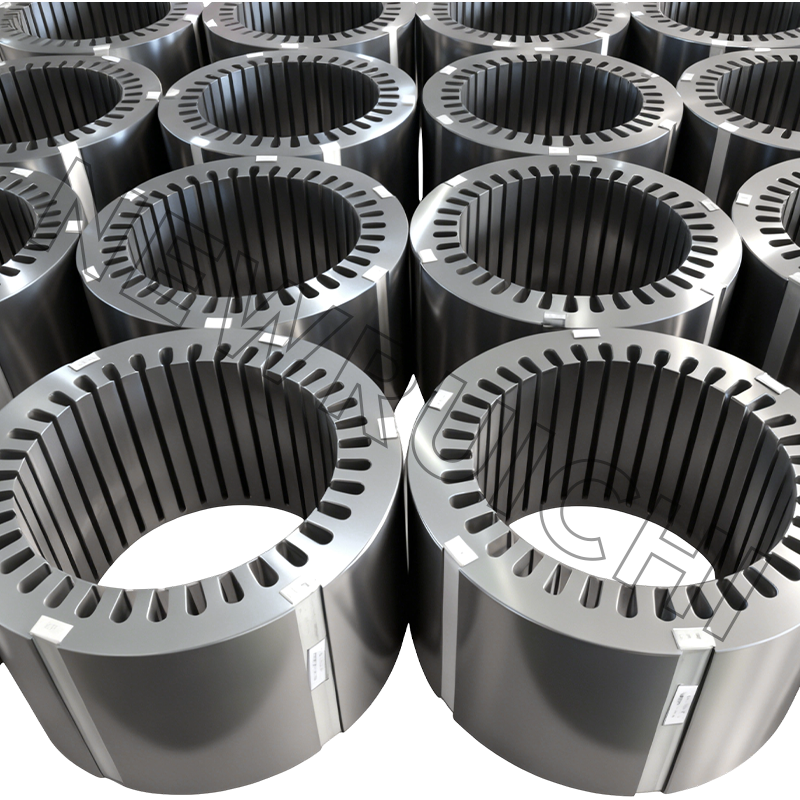
In high-efficiency motors, the design of motor laminations plays a critical role in controlling electromagnetic losses. Electric motor laminations are thin steel sheets stacked together to form the stator core or rotor core. The primary purpose of this layered structure is to reduce eddy current losses within the magnetic core. When alternating magnetic fields pass through solid steel, large circulating currents are generated, which convert electrical energy into heat. By dividing the core into insulated laminations, these circulating currents are significantly restricted.
In practical industrial motors, lamination thickness typically ranges between 0.20 mm and 0.50 mm depending on the operating frequency and efficiency requirements. For example, high-efficiency traction motors used in new energy commercial vehicles often adopt laminations around 0.25 mm or thinner. This reduction in thickness can reduce iron loss by more than 10 percent in certain operating ranges, improving overall system efficiency.
Manufacturers such as Wuxi New Ruichi Technology Co., Ltd. focus on precision electric punching processes to maintain tight tolerances during lamination production. Consistent stamping accuracy ensures that the stacked laminations maintain uniform magnetic paths, which helps prevent localized saturation and improves motor stability under load.
High-speed stamping technology is one of the most critical production processes for stator lamination manufacturing. Even small deviations in slot geometry or burr height can affect motor performance. During the stamping process, the die must maintain consistent cutting edges to prevent deformation of the silicon steel sheets. Excessive burr height can cause insulation breakdown between laminations, increasing eddy current loss.
In modern electric motor production lines, high-speed stamping equipment can reach production rates exceeding 300 strokes per minute. However, maintaining dimensional accuracy at these speeds requires advanced die design and material control. Electric motor laminations manufacturers must balance productivity with precision to achieve reliable performance in high-efficiency motors.
- Burr height typically controlled below 0.03 mm
- Slot width tolerance often maintained within ±0.01 mm
- Surface flatness critical for consistent lamination stacking
Companies specializing in electric punching and core products, such as Wuxi New Ruichi Technology Co., Ltd., integrate advanced stamping technologies to maintain these precision requirements. This is especially important for motors used in rail transit systems and industrial automation equipment, where reliability and efficiency are essential.
The performance of stator core laminations depends heavily on the magnetic properties of the steel used. Electrical steel, commonly referred to as silicon steel, is widely used because of its high magnetic permeability and low core loss characteristics. The silicon content within the steel typically ranges between 2 percent and 3.5 percent, which improves electrical resistance and reduces eddy current losses.
Different applications require different material grades. Motors designed for wind power generators or new energy vehicles often demand materials with lower core losses and higher magnetic flux density. The table below summarizes typical material types used for motor laminations and their common applications.
| Material Type |
Typical Thickness |
Key Characteristics |
Application Fields |
| Cold-rolled non-oriented silicon steel |
0.35 mm |
Balanced magnetic performance |
Industrial motors and pumps |
| High-grade electrical steel |
0.30 mm |
Low core loss |
Energy-efficient motors |
| Ultra-thin electrical steel |
0.20–0.25 mm |
Reduced eddy current loss |
New energy vehicles and wind turbines |
With the rapid development of green energy technologies, demand for high-performance electrical steel continues to grow. Manufacturers increasingly invest in material optimization to meet stricter efficiency standards across electric transportation and renewable energy sectors.
Stacking and Bonding Technologies in Stator Core Manufacturing
After stamping, individual laminations must be stacked to form a complete stator core. The stacking method significantly affects mechanical strength, magnetic continuity, and heat dissipation. Traditional stacking methods rely on mechanical interlocking features formed during stamping. These small tabs allow laminations to lock together during assembly.
In high-performance motors, bonding technologies are increasingly used to improve structural stability. Adhesive bonding or welding techniques can reduce vibration within the stator core, which improves motor noise performance and mechanical durability. These technologies are particularly important for motors used in rail transit or high-speed industrial equipment.
- Interlock stacking for cost-efficient mass production
- Adhesive bonding for improved vibration control
- Laser welding for high-strength stator assemblies
Companies engaged in stator lamination production often combine several stacking techniques depending on the motor design. Wuxi New Ruichi Technology Co., Ltd., for example, develops electric punching and core solutions that integrate advanced manufacturing processes to support demanding applications such as new energy non-road machinery and industrial automation systems.
How Motor Laminations Support the Growth of New Energy Industries
The rapid expansion of new energy technologies has significantly increased the demand for advanced electric motor laminations. Electric drive systems used in new energy commercial vehicles require high torque density and improved efficiency. Achieving these performance targets depends heavily on optimized stator core laminations and precise manufacturing processes.
Beyond transportation, electric motor laminations are also essential in wind power generation systems. Large wind turbines rely on efficient generators where minimizing core loss directly affects power output. In these systems, even small improvements in lamination quality can translate into measurable increases in annual energy production.
Manufacturers are increasingly investing in intelligent manufacturing technologies to support this growing demand. Wuxi New Ruichi Technology Co., Ltd. continues to expand its research and development capabilities, focusing on the integration of AI, smart manufacturing, and green energy technologies. These initiatives aim to improve production efficiency while enabling the development of high-performance stator lamination solutions for emerging industries.

 en
en
 русский
 Deutsch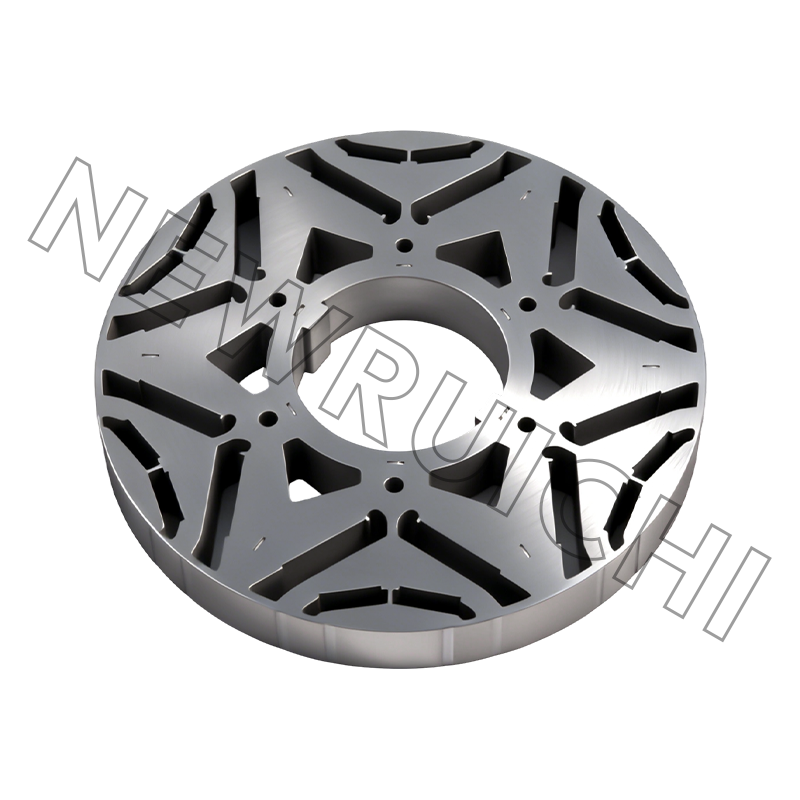


 Email:
  Telephone/Phone: