 en
en
 русский
 Deutsch
Low Core Loss Silicon Steel Transformer Core: Materials, Process & Applications
Content
- 1 Why Low Core Loss Is the Defining Standard
- 2 Grain-Oriented and Non-Oriented Silicon Steel: Matching Material to Application
- 3 Precision Stamping and Annealing: Process as a Performance Variable
- 4 Applications: Power Transformers, Current Transformers, and Reactors
- 5 Low Noise: An Increasingly Critical Requirement
- 6 Supporting Power Transmission and Distribution Reliability
Low Core Loss Silicon Steel Transformer Core for Power Transformers, Current Transformers, and Reactors
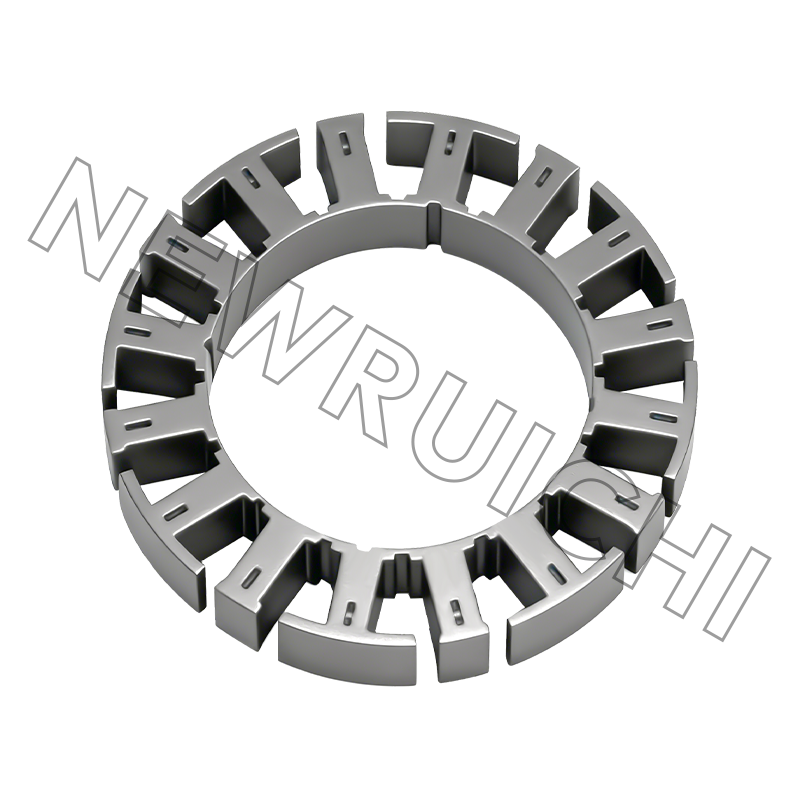
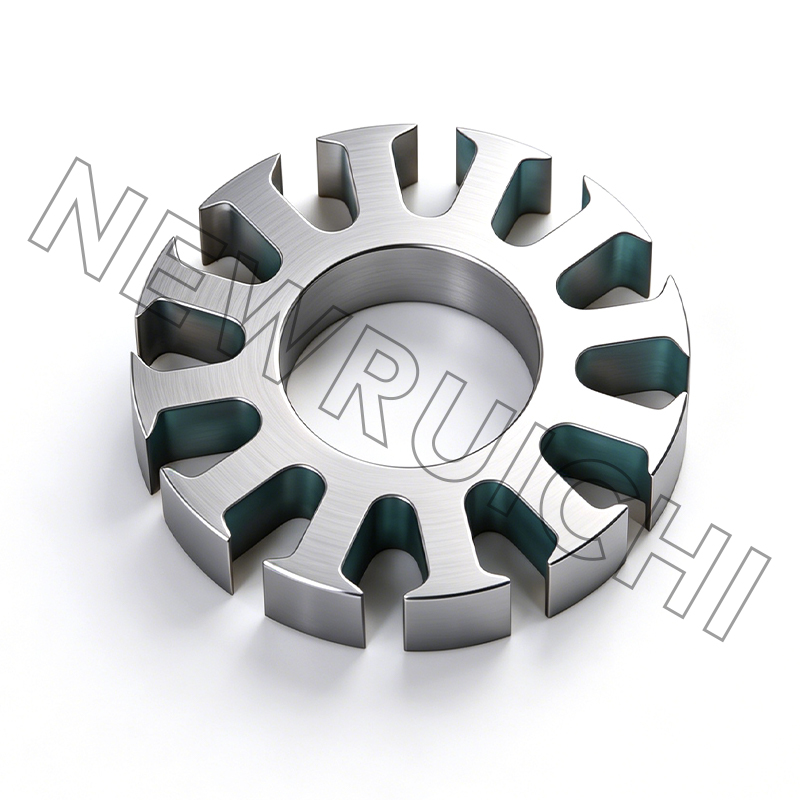
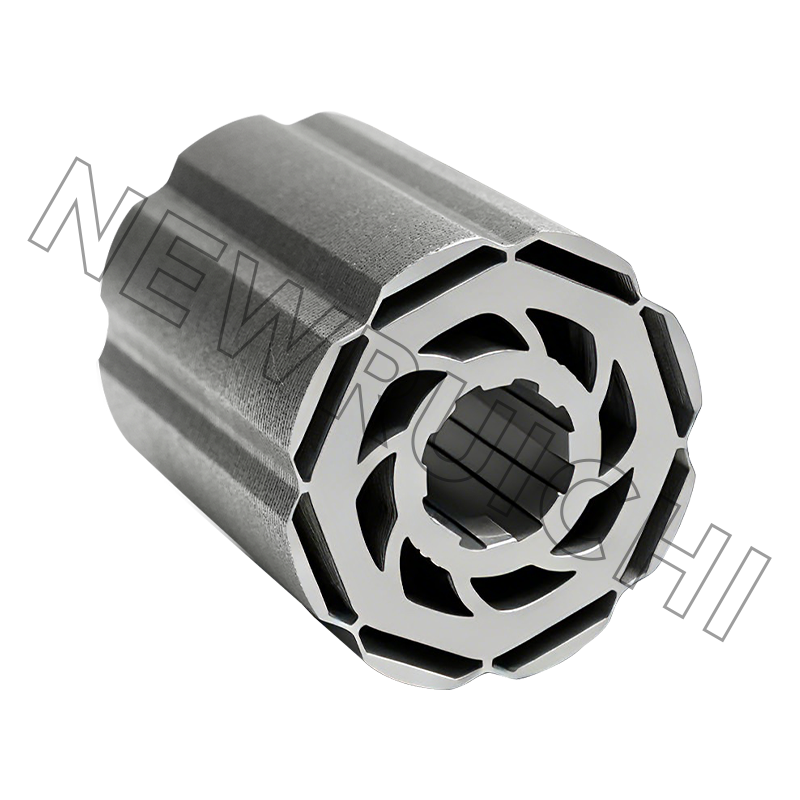
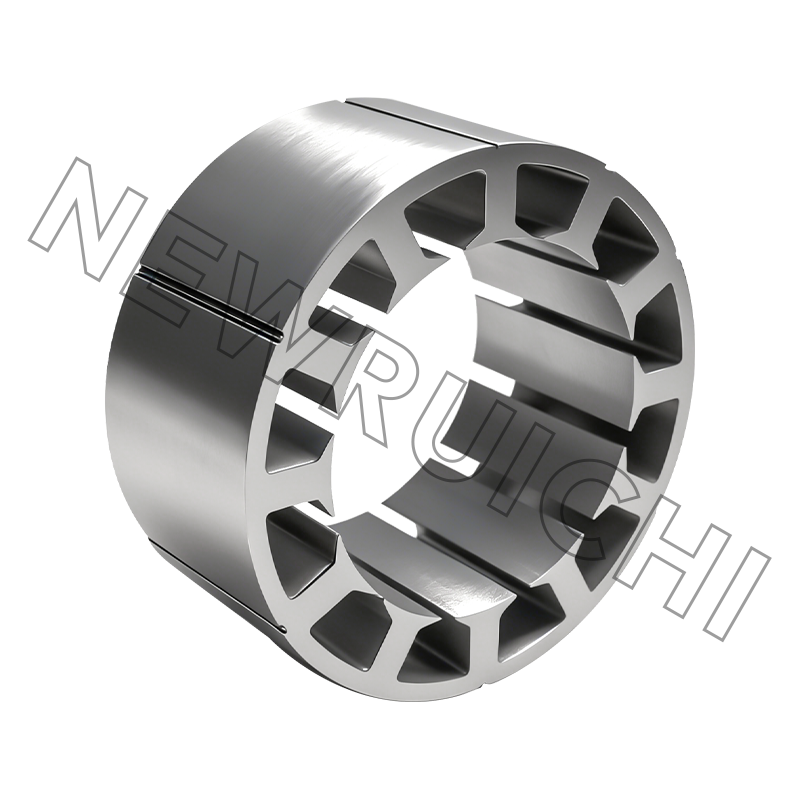
As global power infrastructure continues to expand and efficiency standards grow more stringent, the performance of the transformer core has never mattered more. At Wuxi New Ruichi Technology Co., Ltd., we manufacture laminated silicon steel transformer cores engineered to meet the demands of power transformers, current transformers, reactors, and related electrical equipment — combining low core loss, low noise, and precision manufacturing in every unit.
Why Low Core Loss Is the Defining Standard
In any transformer, the core is not a passive component. It is the magnetic engine of the system. Core losses — made up of hysteresis loss and eddy current loss — directly reduce transformer efficiency, generate unnecessary heat, and increase operating costs over the equipment's lifetime.
A low core loss transformer core minimizes both forms of energy dissipation. Hysteresis loss is reduced through the use of high-quality silicon steel with carefully controlled grain orientation, which lowers the energy required to repeatedly magnetize and demagnetize the material with each AC cycle. Eddy current loss is controlled through lamination: by stacking thin, electrically insulated sheets rather than using a solid block of metal, circulating currents within the core are significantly suppressed.
The result is a transformer core that runs cooler, wastes less energy, and supports more stable operation across the full range of power transmission and distribution conditions.
Grain-Oriented and Non-Oriented Silicon Steel: Matching Material to Application
Not all silicon steel performs the same way, and selecting the correct grade is foundational to core performance.
Grain-oriented silicon steel (GO) is produced so that the crystal structure aligns along the rolling direction. This alignment gives it exceptionally low core loss and high magnetic permeability in that direction, making it the preferred material for power transformer cores and distribution transformer cores where the magnetic flux path is well defined and consistent.
Non-oriented silicon steel (NO) has a more uniform crystal structure without preferred orientation. It offers consistent magnetic properties in all directions, making it well suited for current transformer cores and reactor cores where the flux path is more variable, as well as for applications requiring isotropy in the lamination stack.
New Ruichi sources high-grade GO and NO silicon steel from certified mills and applies strict incoming material inspection to ensure grade consistency before any processing begins.
Precision Stamping and Annealing: Process as a Performance Variable
Material quality sets the ceiling for core performance. Manufacturing precision determines how close the finished core comes to that ceiling.
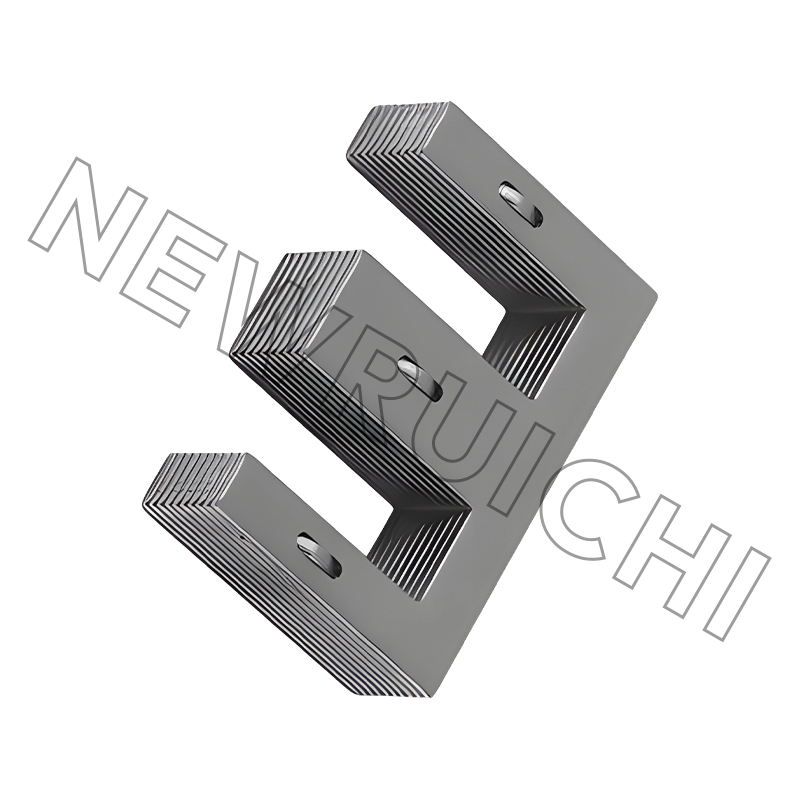
Precision stamping produces lamination geometries — EI cores, UI cores, and custom profiles — with tight dimensional tolerances. Burr-free edges reduce the interlaminar air gaps that degrade magnetic coupling and increase effective core loss. Consistent lamination thickness across every sheet in the stack ensures uniform flux distribution and avoids localized heating.
Annealing is applied after stamping to relieve the internal stresses introduced by the punching process. Cold working during stamping distorts the grain structure of the silicon steel, raising coercive force and increasing hysteresis loss. A controlled annealing cycle restores the material's magnetic properties, bringing core loss back toward the as-rolled specification. This step is often omitted by lower-cost producers — and its absence is measurable in the field.
Together, these two process steps ensure that the magnetic performance specified on the material datasheet is the performance actually delivered by the finished transformer lamination core.
Applications: Power Transformers, Current Transformers, and Reactors
The transformer cores manufactured by New Ruichi are designed to serve three primary application categories within power transmission and distribution systems.
Power transformer cores require the lowest possible core loss at the operating flux density of the system, typically in 50/60 Hz networks. Grain-oriented silicon steel laminations processed to tight dimensional tolerances provide the combination of high efficiency and reliable long-term operation that utilities and industrial users require.
Current transformer cores are used for metering and protection in electrical networks. They demand high magnetic permeability at low flux densities and stable performance across a wide dynamic range. Carefully selected non-oriented silicon steel grades and precise annealing conditions ensure that current transformer cores from New Ruichi maintain accuracy class compliance over the equipment's service life.
Reactor cores — used in power factor correction, harmonic filtering, and smoothing applications — place different demands on the core material. The combination of AC and DC flux components in many reactor designs requires silicon steel grades and lamination geometries that manage saturation behavior while maintaining low acoustic noise under load. New Ruichi's experience with both oriented and non-oriented grades allows reactor cores to be specified correctly for the intended operating point.

Low Noise: An Increasingly Critical Requirement
Transformer noise — the characteristic hum generated by magnetostriction in the silicon steel — is increasingly regulated in urban substations, residential distribution equipment, and industrial environments where operators work in proximity to the equipment.
Low noise transformer core design begins with material selection: silicon steel grades with low magnetostriction coefficients produce smaller dimensional changes per AC cycle and therefore less acoustic emission. It continues with manufacturing: precise lamination dimensions and consistent stacking reduce the mechanical looseness that amplifies magnetostrictive vibration. And it ends with assembly: controlled clamping pressure ensures that the lamination stack behaves as a unified magnetic circuit rather than a collection of individually vibrating sheets.
New Ruichi applies each of these considerations systematically to transformer cores where noise specification is part of the design requirement.
Supporting Power Transmission and Distribution Reliability
The transformer cores manufactured at New Ruichi are ultimately components in systems responsible for moving power safely and efficiently from generation to end use. That context drives every decision in our manufacturing process — from the silicon steel grades we specify, to the stamping tooling we maintain, to the annealing cycles we validate.
We work with transformer manufacturers, electrical equipment OEMs, and engineering procurement teams who need a supplier capable of consistent quality at production volumes, with the technical depth to support specification development and the process discipline to back it up with data.
About Wuxi New Ruichi Technology Co., Ltd. New Ruichi is a manufacturer specializing in the research, development, and production of electric punching and laminated core products. Our transformer lamination core range covers power transformer cores, current transformer cores, and reactor cores in grain-oriented and non-oriented silicon steel. All products are manufactured under ISO 9001 and IATF 16949 certified quality systems.
For product specifications or sourcing inquiries, contact our team at www.newruichi.com.
Your email address will not be published. Required fields are marked *


 Email: [email protected]
[email protected]
 Telephone/Phone:
+86-18861576796 +86-18261588866
Telephone/Phone:
+86-18861576796 +86-18261588866
+86-15305731515 +86-18861576796
Copyright © Wuxi New Ruichi Technology Co., Ltd. / Wuxi Cailiang Machinery Co., Ltd. All rights reserved.
Stator And Rotor Cores Manufacturers
